Short Answer
The Real Rehman Dakait And The Karachi Town That Created Him Behind Dhurandhar From Viral Villain To Real-Life Gangster Black Pathan suit, ... Read more
The Real Rehman Dakait And The Karachi Town That Created Him Behind Dhurandhar
From Viral Villain To Real-Life Gangster
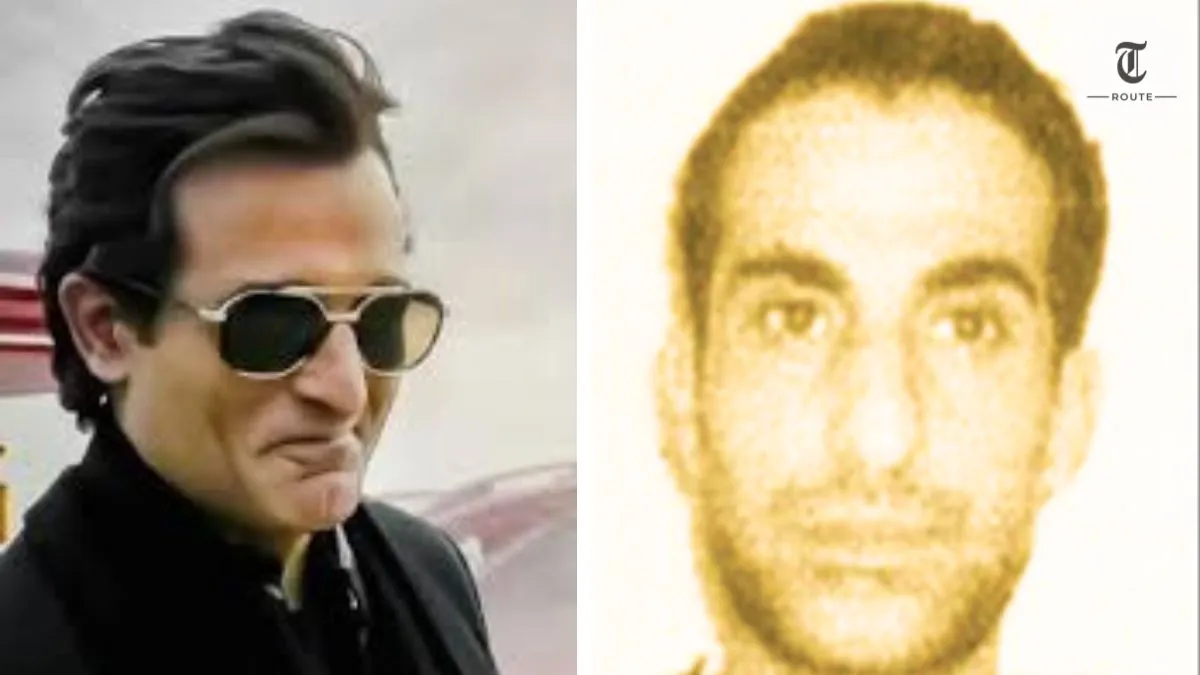
Black Pathan suit, black blazer, black shades – Akshaye Khanna’s swaggering entry as Baloch gangster Rehman Dakait in Aditya Dhar’s Dhurandhar has practically hijacked social media. The song Sher-e-Baloch is everywhere, reels are stacked with his dialogue, and many viewers joke that they forget Ranveer Singh is even in the frame.
But behind the stylised on-screen don lies a real Karachi gangster whose life was far more brutal, messy and political than any film can fully show. The true Rehman Dakait virtually ruled Lyari for years and left behind a bloody legacy that still shapes how this Karachi neighbourhood is remembered.
Lyari: The Karachi Pocket That Bred A Don
Lyari is one of Karachi’s oldest settlements, originally home to Sindhi fishermen and Baloch nomads, and it actually predates modern Karachi itself. Over time it swelled into a dense township of nearly 9 lakh people, as per the 2023 census, but remained chronically neglected when it came to planning, infrastructure and basic civic services.
Poverty, unemployment and weak governance turned Lyari into a fertile ground for crime. Local gangs began treating it like their personal fiefdom, recruiting young boys on daily wages, arming them with Kalashnikovs and sending them to “patrol” streets, often without telling them who they were really firing at.
The Rise Of Rehman Dakait
Born around 1975–1980 to drug smuggler Dad Muhammad and Khadija Bibi, the boy who would call himself Sardar Abdul Rehman Baloch started small-time peddling while still in his teens. By 13, he was reported to have stabbed a man, and a couple of years later, he was accused of murdering his own mother, allegedly because she had ties to a rival gang.
Whether every detail of the matricide is accurate or not, one thing is clear – Rehman’s notoriety skyrocketed in his youth. His string of robberies and violent crimes led to the nickname “Rehman Dakait”, and by about 21 he was already leading his own gang involved in extortion, kidnapping, drug smuggling and illegal arms.
- Early start in drug trade and street crime
- Alleged stabbing at 13 and mother’s killing in late teens
- Leadership of a full-fledged gang by early twenties
- Central role in Lyari gang wars against rival Arshad Pappu
Gang Wars And The Kingdom Of Fear
For nearly a decade, Lyari lived under a cloud of fear as Rehman’s group clashed repeatedly with rival don Arshad Pappu and his men. Streets often emptied when violence flared, and ordinary life in the area would freeze during intense phases of gang warfare.
Reports describe a chilling level of cruelty. Rehman and his cousin Uzair Baloch – whose fictionalised version is also seen in Dhurandhar – allegedly used severed heads of rivals as a show of strength, even forcing people to “play football” with them to send a message. The real Lyari was far more horrifying than the stylised brutality shown on screen.
From Street Don To Political Player
Rehman was not satisfied simply ruling Lyari through fear. He understood that lasting power in Pakistan runs through politics. Lyari had long been a stronghold of the Pakistan Peoples Party (PPP), and over time photographs surfaced showing him with figures like former home minister Zulfiqar Mirza and in the vicinity of Benazir Bhutto.
Some local accounts claim that his growing clout and political links tied law-enforcement hands at various points, while senior police officers have publicly denied that top PPP bosses ever pressured them to go soft on him. What most agree on is that a political and administrative vacuum in Lyari, combined with poverty, helped men like Rehman become alternative power centres.
The People’s Aman Committee And Rebranding As Sardar Abdul Rehman Baloch
By the late 2000s, Rehman tried to swap the “Dakait” tag for something more respectable. He began calling himself Sardar Abdul Rehman Baloch, emphasising tribal identity rather than his criminal reputation. In 2008, he helped form the People’s Aman Committee (PAC), which was projected as a peace-and-development platform meant to stabilise Lyari.
According to PAC chairman Maulana Abdul Majeed Sarbazi, Rehman wanted to end the bloody feud that had divided the Baloch community and killed scores of innocents. PAC initially appeared close to the PPP, and rumours even circulated that Rehman might contest elections, while gun-toting men believed to be from his network were seen guarding PPP leader Asif Ali Zardari at times.
The Encounter That Ended His Reign
In August 2009, Rehman Dakait’s story officially ended in a police operation. He was killed in what authorities described as an encounter during a targeted crackdown on Lyari’s gangs. With his death, his cousin Uzair Baloch reportedly took over much of the gang’s operations.
But even his death remains controversial. Sarbazi and others have pointed to autopsy reports suggesting shots fired from very close range, arguing that this does not resemble a typical running gun battle. They question why the state allowed years of open gang warfare but intervened with deadly force only after things had started stabilising under PAC.
Conspiracy Theories And Political Shadows
Unsurprisingly, conspiracy theories flourished. Some sources close to PPP circles have claimed that top leaders wanted Rehman removed once he became “too big for his boots” or started demanding direct political power rather than acting as a behind-the-scenes enforcer. Others allege he was selling weapons to the Balochistan Liberation Army and that a soured deal sealed his fate.
PPP leaders, however, have publicly dismissed these claims, insisting he was “too insignificant” for the very top leadership to fear him and stressing that the party had no formal links with PAC after his death. As with many encounter killings in the region, the complete truth may never be fully known.
Chaudhry Aslam, Dhurandhar And A Widow’s Disagreement
Aditya Dhar’s Dhurandhar doesn’t just fictionalise Rehman; it also channels elements of Karachi’s legendary encounter specialist Chaudhry Aslam through Sanjay Dutt’s character. Aslam, one of Pakistan’s most feared and debated police officers, survived multiple assassination attempts before being killed in 2014.His widow, Noreen Aslam, has publicly criticised how the film frames both her husband and Rehman. She says she was hurt by terms like “son of the devil” and “jinn” used for Aslam, calling them disrespectful to him and his mother.[web:22] She also downplays Rehman’s stature, insisting he was powerful only in limited areas and “nothing” compared to her husband’s reach.
From Lyari’s Alleys To Indian Screens
Despite those objections, Dhurandhar has turned Rehman into a full-blown pop-culture phenomenon. The film, led by Ranveer Singh with an ensemble including Sanjay Dutt, Arjun Rampal and R. Madhavan, crossed the ₹100 crore mark worldwide in its opening weekend, powered heavily by word-of-mouth and Akshaye Khanna’s breakout villain turn.
In the movie, Khanna’s fictional Rehman rules Lyari alongside Uzair Baloch, while Ranveer’s spy character Hamza infiltrates the organisation to bring him down. Off-screen, the real Rehman Dakait lived barely three decades, but the tales of his cruelty, his flirtation with politics and his controversial death have outlived him – and now, thanks to Dhurandhar, those stories have crossed the border from Karachi’s backstreets into India’s multiplexes.
Sources & Notes
This article is written as an independent explainer. Readers should verify official announcements through primary public sources, court records, government notices or the concerned organisation before acting on political or legal claims.
FAQs
What is TruthRoute.com?
TruthRoute.com is an independent U.S.-based global news and analysis website publishing source-based reporting, explainers and opinion across world, politics, business, tech, health, entertainment and sports.
How should readers use this article?
Use it as an independent explainer and starting point for context. For legal, political or official claims, always check primary documents and official sources.

Truth Route Editor
Newsroom byline for source-based explainers, viral story breakdowns and public-interest updates published by TruthRoute.com.