Short Answer
Victorian Diseases List: Common Illnesses in the 19th Century Explained Simply People in the Victorian era got sick far more often than ... Read more
Victorian Diseases List: Common Illnesses in the 19th Century Explained Simply
People in the Victorian era got sick far more often than today. This article lists the diseases that were most common during that time with simple explanations.
Why diseases were common in Victorian times
Cities grew rapidly from 1837-1901 but sanitation systems lagged behind. Slums packed thousands into tiny rooms with open sewers running in the streets. Shared wells became contaminated with human waste spreading cholera and typhoid easily. Doctors didn’t understand germ theory so they treated symptoms rather than root causes like overcrowding and poor nutrition.
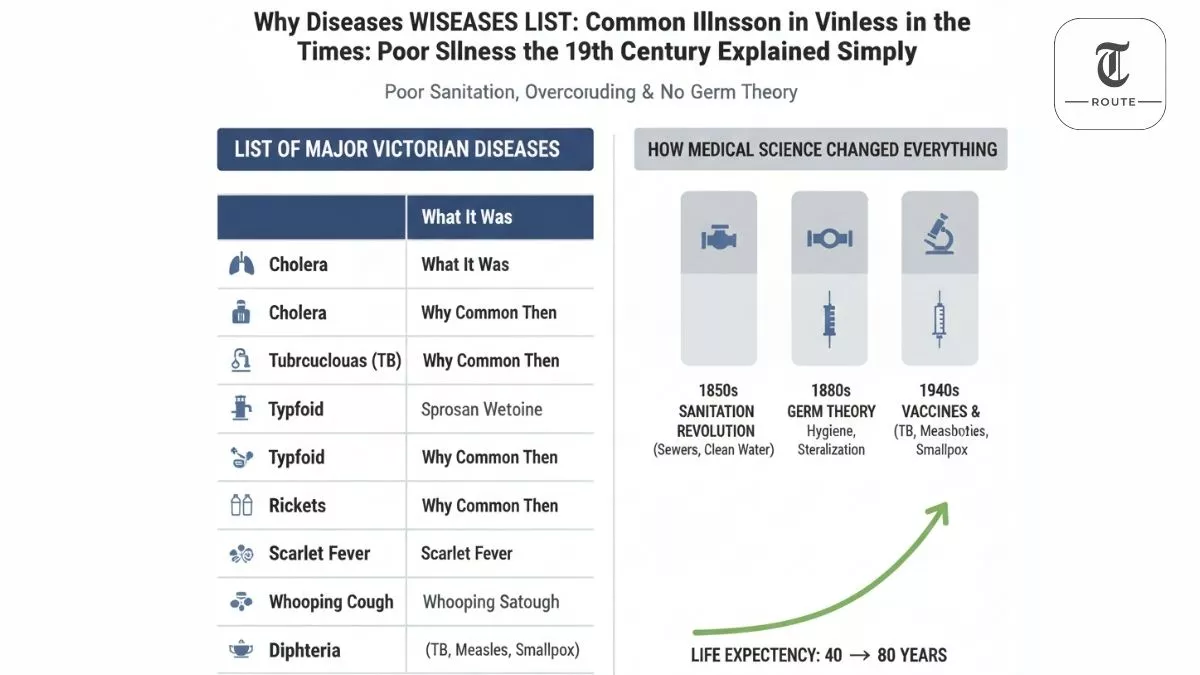
List of major Victorian diseases
| Disease | What It Was | Why Common Then |
|---|---|---|
| Cholera | Violent diarrhea deadly dehydration | Contaminated drinking water pumps |
| Tuberculosis (TB) | Lung infection coughing blood | Crowded damp housing poor ventilation |
| Typhoid | High fever delirium weeks | Sewage in drinking water supply |
| Rickets | Soft bones bowed legs children | No sunlight vitamin D poor diet |
| Scurvy | Bleeding gums loose teeth | No fresh fruit vitamin C factory diets |
| Scarlet Fever | Rash sore throat deadly kids | Overcrowded schools poor hygiene |
| Whooping Cough | Violent coughing can’t breathe | No vaccines infants hit hardest |
| Diphtheria | Throat coating breathing blocked | Crowded conditions bacteria spread |
Each disease thrived in specific conditions but all connected to poor living standards. Cholera killed fastest through water while typhoid burned slow with fever. TB wasted victims over months. Nutritional diseases like rickets and scurvy showed factory worker diets of bread and tea only.

How medical science changed everything
The sanitation revolution starting in the 1850s built sewers and clean water pipes that slashed waterborne killers dramatically. Germ theory in the 1880s proved microbes cause disease leading to handwashing and sterilization. Vaccines wiped out smallpox diphtheria whooping cough and measles. Antibiotics from the 1940s conquered TB and typhoid infections routinely.
Life expectancy doubled from 40 to 80 years through basic public health measures. Modern medicine’s preventive approach keeps Victorian diseases in history books except in extreme deprivation cases.
Frequently Asked Questions
Which disease killed most Victorians?
Tuberculosis—responsible for about a quarter of all deaths due to crowded damp conditions.
What caused rickets in Victorian children?
Vitamin D deficiency from no sunlight in city slums and poor milk diets caused soft bones and deformities.
How was cholera eliminated?
Clean water systems and sewers removed fecal contamination from drinking supplies starting in the 1860s.
The Victorian diseases list shows the power of public health progress. Simple engineering nutrition and vaccines transformed human lifespan. Understanding this era reminds us to value modern sanitation systems.
Updated January 18, 2026.
Sources & Notes
This article is written as an independent explainer. Readers should verify official announcements through primary public sources, court records, government notices or the concerned organisation before acting on political or legal claims.
FAQs
What is TruthRoute.com?
TruthRoute.com is an independent U.S.-based global news and analysis website publishing source-based reporting, explainers and opinion across world, politics, business, tech, health, entertainment and sports.
How should readers use this article?
Use it as an independent explainer and starting point for context. For legal, political or official claims, always check primary documents and official sources.

Truth Route Editor
Newsroom byline for source-based explainers, viral story breakdowns and public-interest updates published by TruthRoute.com.