Short Answer
If you’ve driven past your local Pizza Hut lately and noticed the “Red Roof” looks a little dim, you aren’t alone. In ... Read more
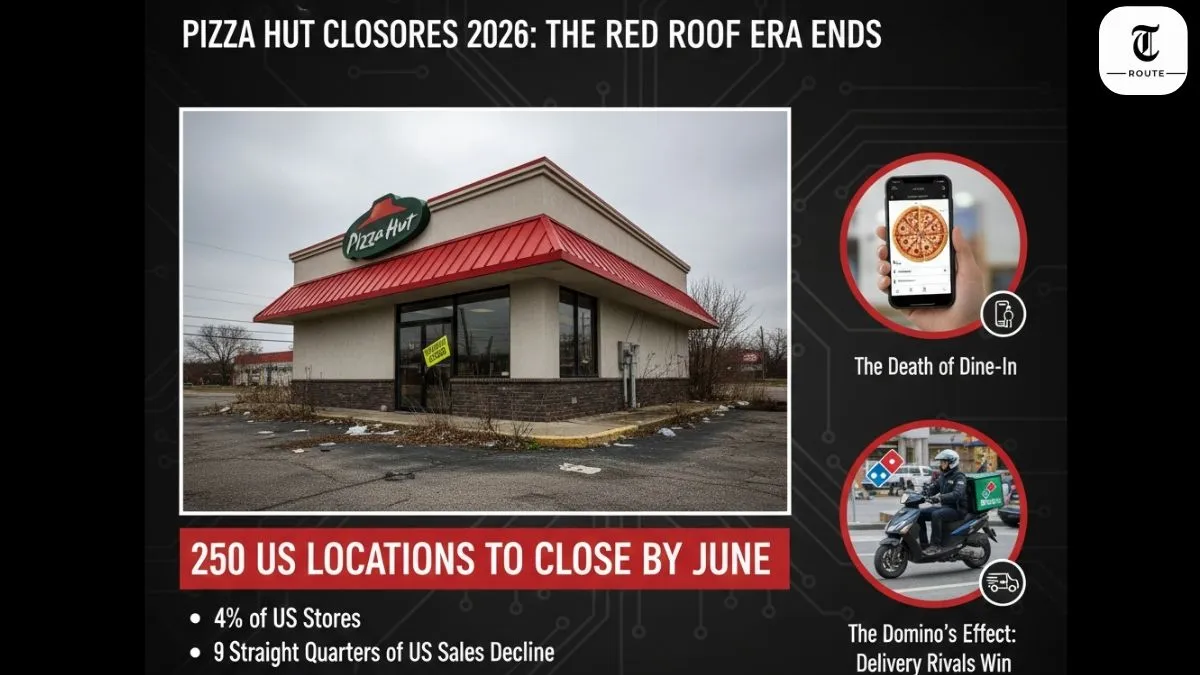
If you’ve driven past your local Pizza Hut lately and noticed the “Red Roof” looks a little dim, you aren’t alone. In a move that has sent shockwaves through the fast-food industry, Yum! Brands officially announced that hundreds of Pizza Hut locations will permanently close their doors in the first half of 2026.
For many of us, Pizza Hut wasn’t just a place to grab a slice—it was the home of the “Book It!” stars and Friday night family dinners. But as consumer habits shift toward lightning-fast delivery and digital-first ordering, the “dine-in” nostalgia isn’t enough to keep the ovens running. Here is the breakdown of what is happening, why it’s happening, and how to check if your local spot is on the list.
The 2026 Pizza Hut Retrenchment: By the Numbers
During the Q4 2025 earnings call (held in February 2026), Yum! Brands CFO Ranjith Roy confirmed a massive shift in the company’s domestic footprint. Here are the core facts you need to know:
- Total Closures: Approximately 250 locations across the United States.
- The Timeline: Closures are scheduled to be completed by the end of June 2026.
- The Impact: This represents nearly 4% of Pizza Hut’s total U.S. store base (which currently sits at about 6,360 locations).
- Financial Context: U.S. same-store sales have dropped for 9 consecutive quarters, including a 5% decline for the full year in 2025.
Why is Pizza Hut Closing So Many Stores?
It’s easy to blame the economy, but the reality is more complex. I’ve analyzed the market shifts, and three major factors are driving this “strategic review.”
1. The Death of the Dine-In Model
Most of the 250 targeted stores are older “legacy” locations. These were built for a 1990s world where families sat down for a salad bar. Today’s customer wants their stuffed crust delivered via an app. Maintaining large, expensive real estate for a half-empty dining room simply doesn’t make sense in 2026.
2. The “Domino’s Effect”
Competitors like Domino’s and Papa Johns have leaned heavily into delivery technology and aggressive value pricing. While Pizza Hut attempted to fight back with its $5 menu, executives admitted it failed to drive the necessary traffic to offset rising labor and food costs.
3. “Hut Forward” and the Potential Sale
Yum! Brands (which also owns Taco Bell and KFC) has initiated a program called “Hut Forward.” This is essentially a “house cleaning” phase. CEO Chris Turner hinted that by closing underperforming stores, the brand becomes more attractive for a potential sale to a private equity firm or a new ownership structure later this year.
Pizza Hut Store Closures List 2026: Which Locations are At Risk?
As of right now, Yum! Brands has not released a public list of specific addresses. They typically leave those announcements to the individual franchisees who own the stores. However, based on industry trends and company statements, your local store is at higher risk if:
- It is a “Legacy” Dine-In Store: If it has the classic red roof and a large seating area, it is a prime candidate for closure.
- It is in a Saturated Market: In cities where multiple delivery-only “Hut” units are nearby, the underperforming full-service units are being phased out.
- Regional Trends: Watch for closures in states like Ohio, Florida, and California, where rising operating costs have hit franchisees the hardest.
Pro Tip: To check your specific store, visit the official Pizza Hut Store Locator. If your local store no longer appears or shows “temporarily closed” during normal hours, it may be part of the 250-unit cut.
The Economic Impact on Local Communities
Beyond the loss of a favorite pizza spot, these closures have real-world consequences. We are looking at thousands of service-sector jobs being displaced. While Yum! Brands claims they are trying to relocate employees to other sibling brands like Taco Bell, that isn’t always possible for part-time workers in rural areas.
Furthermore, these closures often leave “dark” real estate in suburban strip malls, which can take months or years to fill, impacting the local tax base and surrounding small businesses.
Is There a Future for the “Hut”?
It isn’t all bad news. While 250 stores are closing, Pizza Hut actually opened over 1,100 new locations globally last year. The brand is growing—just not in the U.S. in its current form. The future of Pizza Hut in America is smaller, faster, and more digital.
Expect to see more “delivery-only” kiosks and “Delco” (Delivery/Carry-out) units. They may be losing the salad bar, but they are fighting to keep the brand alive for a new generation of eaters.
Final Thoughts
The 2026 Pizza Hut closures are a classic example of “adapt or die” in the fast-food world. For those of us who grew up with the brand, it’s a sad milestone. For the business, it’s a necessary surgical move to stay competitive against rivals who moved faster into the digital age.
What do you think? Is your local Pizza Hut still busy, or has it seen better days? Let us know in the comments below—we are tracking local closure reports from readers across the country.
Sources & Notes
This article is written as an independent explainer. Readers should verify official announcements through primary public sources, court records, government notices or the concerned organisation before acting on political or legal claims.
FAQs
What is TruthRoute.com?
TruthRoute.com is an independent U.S.-based global news and analysis website publishing source-based reporting, explainers and opinion across world, politics, business, tech, health, entertainment and sports.
How should readers use this article?
Use it as an independent explainer and starting point for context. For legal, political or official claims, always check primary documents and official sources.

Truth Route Editor
Newsroom byline for source-based explainers, viral story breakdowns and public-interest updates published by TruthRoute.com.