Short Answer
Is Netanyahu Dead? Viral Video Sparks AI Deepfake Rumours Amid Iran vs US-Israel War A video of Israeli Prime Minister Benjamin Netanyahu ... Read more
Is Netanyahu Dead? Viral Video Sparks AI Deepfake Rumours Amid Iran vs US-Israel War
A video of Israeli Prime Minister Benjamin Netanyahu has set off a massive wave of speculation across social media. Thousands of users on X, formerly known as Twitter, and Instagram are claiming the footage was either created or significantly altered using artificial intelligence. The timing could not be more sensitive. The video surfaced right in the middle of the rapidly intensifying conflict between Iran, Israel, and the United States.
What Triggered the Online Debate
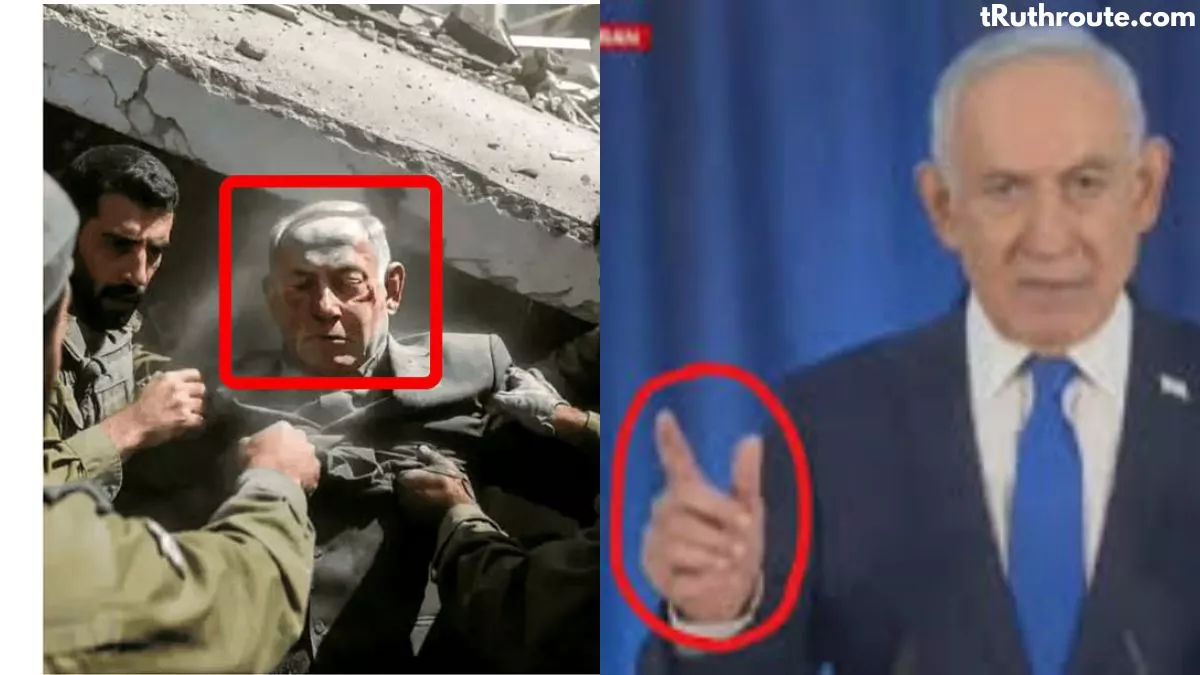
The controversy began when users started examining the video frame by frame. One particular still from the footage quickly became the centre of attention. In that frame, Netanyahu’s hand appears visibly distorted while gesturing near a microphone.
Several users pointed to what looked like six fingers instead of five in the image. Distorted or extra fingers have become one of the most widely recognised markers people use to identify AI-generated visuals, largely because early generative AI tools consistently struggled to render human hands accurately.
Zoomed-in screenshots with arrows pointing at the hand began circulating rapidly. Captions like “look closely at the hand”, “classic AI finger glitch”, and “this video is clearly synthetic” accompanied the posts. Within hours, the content had collectively gathered millions of views and pushed the topic into trending territory on multiple platforms.
What People Are Saying on Social Media
The reaction online ranged from sceptical analysis to outright conspiracy claims. Some users framed the video as evidence of a digital propaganda strategy, suggesting it was produced to allow Netanyahu to deliver wartime messages without making a live public appearance.
Prominent X accounts and political commentators picked up the story and amplified it further. Questions like “Where is Netanyahu?”, “Why has he not been seen publicly in days?”, and “Why are no Western news outlets asking these questions?” started appearing across viral threads.
Some posts went further, speculating whether the Israeli Prime Minister had been killed, injured, or was in hiding, using the alleged AI video as the basis for those claims. None of these claims have been verified by any credible source.
Why Hands Have Become the Internet’s AI Detection Test
The focus on Netanyahu’s hand is not random. Hands became a well-known weakness of AI image and video generation tools early on. Bizarre finger counts, fused digits, and distorted knuckles appeared frequently in AI-generated images, which trained internet users to look at hands first when questioning whether something is real.
The “count the fingers” check has become so common online that it regularly appears as a joke in AI-related discussions. So when a screenshot showing what appeared to be an irregular hand shape surfaced from a Netanyahu video during an active war, the response was almost instant and very loud.
Deepfake Paranoia in a Wartime Information Environment
The Netanyahu video controversy did not emerge in a vacuum. It appeared during one of the most volatile and media-saturated periods in Middle Eastern geopolitics in recent memory. The ongoing conflict involving Iran, Israel, and the United States has flooded social media with alleged missile strike footage, battlefield imagery, military statements, and satellite images.
A significant portion of that content has already been identified as misleading, outdated, or digitally manipulated. In that environment, every new video tied to the conflict faces immediate scrutiny. Even small visual irregularities, a strange shadow, a flickering background, a blurred edge, are enough to trigger full-scale online forensic investigations.
AI tools capable of producing hyper-realistic synthetic video have also improved dramatically in recent years. Audiences are aware of this, which means the level of suspicion attached to digital footage involving political leaders is now higher than at any previous point in history.
Citizen Forensics: When the Public Becomes the Investigator
One of the most notable aspects of this controversy is how the analysis spread. Rather than waiting for journalists or official fact-checkers to weigh in, social media users conducted their own investigations in real time. They slowed the video down, enhanced individual frames, applied image filters to highlight edges, and fed the footage into AI tools to test for signs of manipulation.
This kind of crowdsourced media analysis has become a defining feature of how information spreads online. It can occasionally expose genuine manipulation. It can also produce widespread misinterpretations when normal technical video compression artifacts get mistaken for deliberate alterations. The problem is that once a suspicious screenshot starts circulating, the narrative travels far faster than any correction can follow.
AI Fear Meets Political Conspiracy
Beyond the technical debate, this controversy reflects something deeper happening in online culture. Theories suggesting that governments secretly use digital doubles, AI-generated speeches, or synthetic media for political messaging have been growing steadily. They tend to gain the most traction during moments of uncertainty, when official information is scarce and large audiences are searching for alternative explanations.
The Netanyahu video arrived at exactly that kind of moment. Whether the footage is ultimately shown to be authentic or manipulated, the speed and scale of the viral reaction reveals how profoundly public trust in digital media has shifted.
For most of the past century, video footage was treated as one of the most dependable forms of evidence available. That assumption is now eroding rapidly. Every clip featuring a political figure, particularly during a period of active conflict, faces instant suspicion from millions of online viewers equipped with editing tools, AI software, and deep scepticism about official sources.
The Netanyahu video debate may be more than just another viral rumour. It may be an early and clear example of what information warfare looks like going forward, where the contest is not only over events themselves but over whether audiences trust the images they are shown at all.
Sources & Notes
This article is written as an independent explainer. Readers should verify official announcements through primary public sources, court records, government notices or the concerned organisation before acting on political or legal claims.
FAQs
What is TruthRoute.com?
TruthRoute.com is an independent U.S.-based global news and analysis website publishing source-based reporting, explainers and opinion across world, politics, business, tech, health, entertainment and sports.
How should readers use this article?
Use it as an independent explainer and starting point for context. For legal, political or official claims, always check primary documents and official sources.

Truth Route Editor
Newsroom byline for source-based explainers, viral story breakdowns and public-interest updates published by TruthRoute.com.