Short Answer
US Strikes Kharg Island as Iran War Enters Third Week: Trump Threatens Oil Infrastructure The United States has carried out what President ... Read more
US Strikes Kharg Island as Iran War Enters Third Week: Trump Threatens Oil Infrastructure
The United States has carried out what President Donald Trump described as one of the most powerful bombing raids in the history of the Middle East, targeting military installations on Kharg Island, Iran’s most critical oil export terminal. The strikes mark a significant escalation as the Iran-US conflict moves into its third week with no clear end in sight.
What Trump Said About the Kharg Island Strikes
President Trump announced the attack through social media, stating that US Central Command had completely destroyed every military target on the island. He referred to Kharg Island as Iran’s crown jewel, a reference to the fact that the island handles an estimated 90 to 95 percent of Iran’s entire oil export volume.
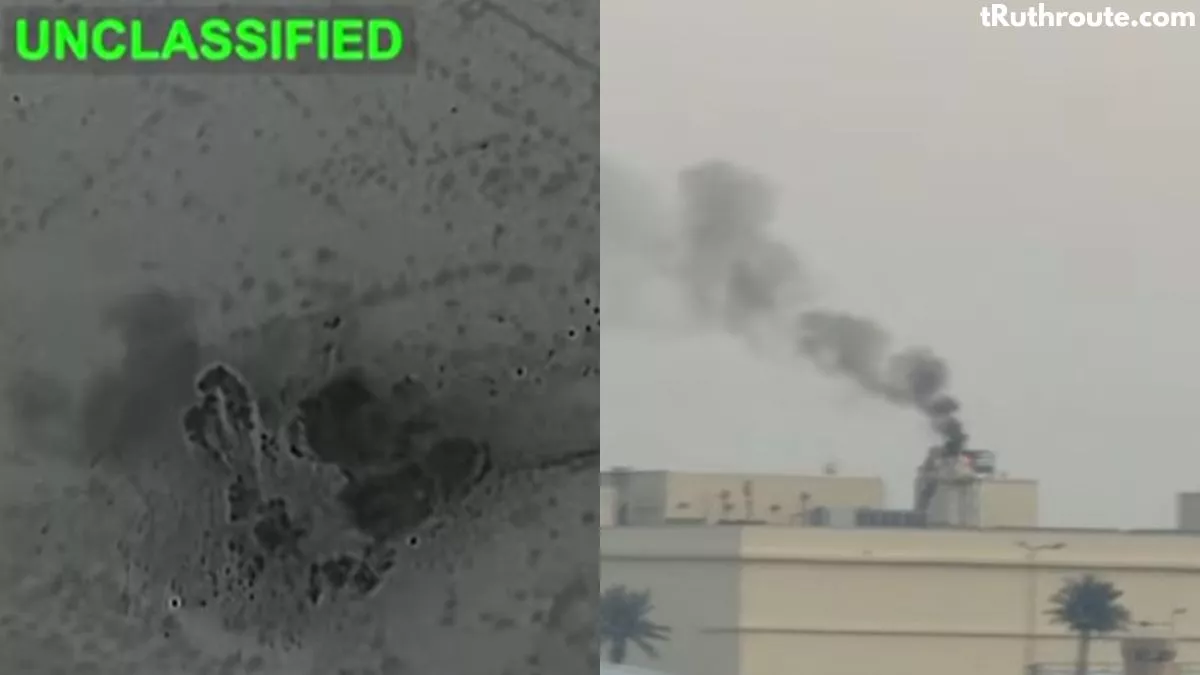
Trump also posted images he claimed were from the strikes. He confirmed that oil infrastructure on the island was deliberately left untouched during this round of attacks. However, he issued a direct and pointed warning alongside that confirmation. If Iran continues to block or interfere with shipping through the Strait of Hormuz, that decision could change.
When asked by reporters how long the conflict would continue, Trump said he could not say with certainty but added that Iran had been decimated and that its country was in bad shape and collapsing.
Why Kharg Island Matters So Much
Kharg Island is not simply a military outpost. It is the economic lifeline of Iran. Over 90 percent of Iranian oil exports pass through the island, with China being the primary buyer. Any damage to the oil infrastructure there would not just cripple the current Iranian government financially. It would cause lasting damage to the Iranian economy regardless of which regime controls the country.
Iran’s state-linked Fars News Agency, which has close ties to the Revolutionary Guard, confirmed that some military positions and equipment on the island were damaged during the strikes. It also confirmed, consistent with Trump’s own statement, that the oil infrastructure was not hit.
Iran’s Response and the Strait of Hormuz Blockade
Iran has responded with threats of its own. Iranian authorities warned they would immediately destroy and reduce to ashes oil and energy infrastructure belonging to any company working with the United States. Separately, Iran issued a maritime warning declaring that all navigation through the Strait of Hormuz is banned.
Ships have been holding back rather than risk the passage. The Strait of Hormuz is one of the world’s most strategically important waterways, through which a significant portion of global oil supply moves. The blockade has already sent oil prices rising sharply, giving Iran some degree of economic leverage in the standoff.
However, analysts warn that if Trump follows through on his threat to target oil infrastructure, that leverage disappears instantly. With 90 percent of export capacity at risk, the economic consequences for Iran would be catastrophic and long-lasting.
US Embassy in Baghdad Hit in Missile Strike
In a separate development, the United States Embassy in the Iraqi capital Baghdad came under a missile attack. Smoke was seen rising from the embassy building following the strike. Iran-backed groups operating in Iraq are believed to be responsible, though no group had formally claimed responsibility at the time of reporting.
The attack on the embassy signals that the conflict is spreading beyond Iranian borders and drawing in Iran’s regional proxies across the Middle East.
US Sending More Forces to the Region
According to CBS News, the United States is preparing to deploy additional military assets to the Middle East. The reinforcements are expected to be led by the USS Tripoli, an amphibious assault ship currently stationed in Japanese waters. The vessel is carrying thousands of Marines and would take approximately two weeks to reach the Gulf from its current position.
The Pentagon declined to comment on the deployment, citing operational security concerns. However, the movement of an amphibious assault group toward the region has fuelled speculation about whether ground operations are being considered, particularly with regard to Kharg Island itself.
Military analysts have noted that an air campaign alone is unlikely to achieve the stated goal of regime change, which both Trump and Israeli Prime Minister Benjamin Netanyahu have referenced as an objective. A ground force of the reported size would be sufficient to potentially secure a location like Kharg Island but falls well short of what a full regime change operation would require.
Iranians Left in the Dark as Internet Is Cut Off
One of the most troubling aspects of the conflict is the situation facing ordinary Iranian civilians. The Iranian government has shut down internet access across the country, leaving millions of people unable to find out where strikes are happening or whether their family members are safe.
Unlike Israel, where citizens receive sirens and phone alerts during attacks and have access to shelters, Iranians have none of these protections in place. There are no warning systems, no public shelters, and now no reliable internet connection either.
BBC Persian, which reaches approximately 24 million people worldwide, the majority of them inside Iran, has reported that some Iranians are spending significant amounts of money on VPN access just to connect briefly and contact relatives abroad. Possessing a Starlink device inside Iran has become extremely dangerous, as the Iranian regime has categorised it as cooperation with the enemy, effectively treating it as espionage.
No End in Sight
With the US deploying additional ships and Marines, Iran threatening retaliation against energy infrastructure, and the Strait of Hormuz remaining a flashpoint, the conflict shows no signs of a near-term resolution. Trump has stated the mission is ahead of schedule, but has not defined what the final objective looks like or when it would be considered achieved.
The stakes surrounding Kharg Island remain enormous. Targeting the oil infrastructure there would fundamentally reshape the Iranian economy and the regional energy market simultaneously. Both sides appear to understand that, which is why it remains the central pressure point in the standoff.
Sources & Notes
This article is written as an independent explainer. Readers should verify official announcements through primary public sources, court records, government notices or the concerned organisation before acting on political or legal claims.
FAQs
What is TruthRoute.com?
TruthRoute.com is an independent U.S.-based global news and analysis website publishing source-based reporting, explainers and opinion across world, politics, business, tech, health, entertainment and sports.
How should readers use this article?
Use it as an independent explainer and starting point for context. For legal, political or official claims, always check primary documents and official sources.

Truth Route Editor
Newsroom byline for source-based explainers, viral story breakdowns and public-interest updates published by TruthRoute.com.