Short Answer
Why Is Marijuana Being Moved to Schedule 3? Explained Simply Direct Answer Marijuana is being moved from Schedule 1 to Schedule 3 ... Read more
Why Is Marijuana Being Moved to Schedule 3? Explained Simply
Direct Answer
Marijuana is being moved from Schedule 1 to Schedule 3 because federal agencies now recognize it has accepted medical uses and moderate abuse potential, rather than “no medical value and high risk” as previously classified. This change opens research and prescription pathways.
Why People Are Searching This Right Now
The marijuana Schedule 3 question exploded after President Trump signed an executive order directing federal agencies to reclassify cannabis. This historic shift acknowledges decades of state-level medical programs and growing scientific evidence. Suddenly, everyone’s asking: what does Schedule 3 actually mean for weed?
Doctors want to know prescription rules. Businesses eye tax breaks. Patients wonder about access. And curious readers want the simple explanation behind the headlines. Here’s what you need to know.
Simple Explanation: Schedule 1 vs Schedule 3
Think of drug schedules like school grades for medicine:
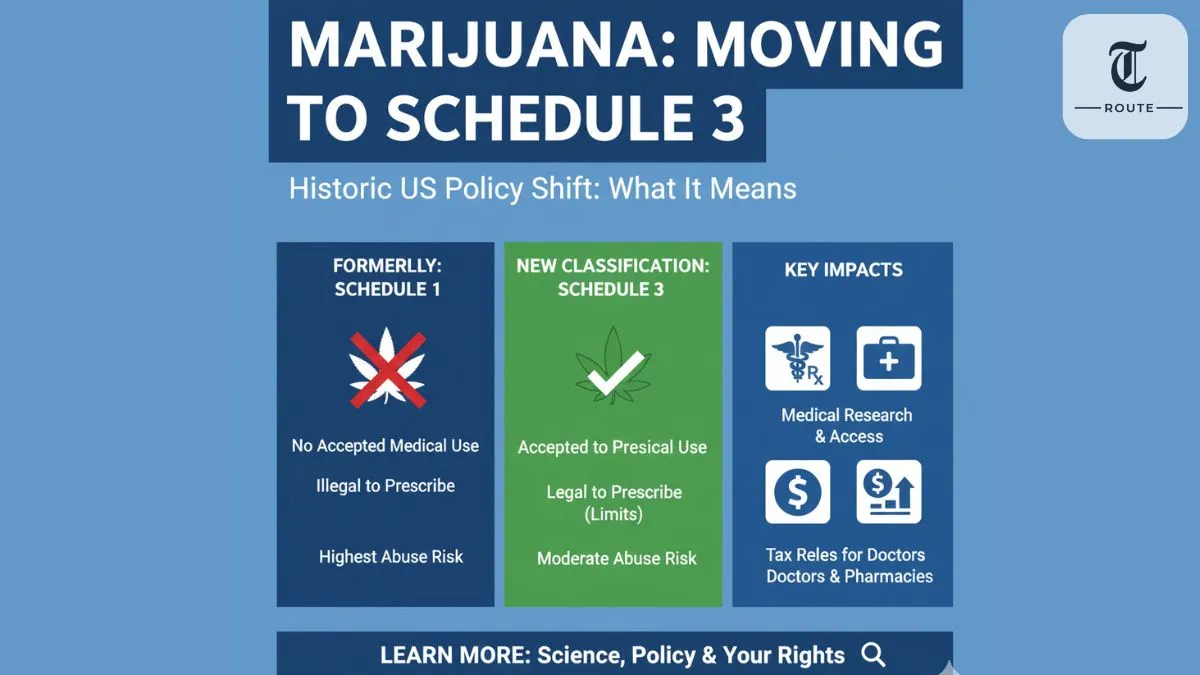
- Schedule 1 = “F” grade: No accepted medical use, highest abuse risk. Heroin, LSD. Doctors can’t prescribe these federally.
- Schedule 3 = “C” grade: Accepted medical use, moderate abuse risk. Ketamine, low-dose codeine, anabolic steroids. Doctors can prescribe with limits.
Moving marijuana to Schedule 3 is like upgrading it from “F” to “C.” It doesn’t make cannabis fully legal federally, but it admits the government was wrong about “no medical value” and opens new possibilities.
Schedule 1 vs Schedule 3: Side-by-Side Comparison
| Aspect | Schedule 1 (Current) | Schedule 3 (New) |
|---|---|---|
| Medical use | None accepted federally | Accepted medical use |
| Doctor prescriptions | Illegal | Legal with limits |
| Research | Nearly impossible | Much easier |
| Business taxes | 280% tax penalty | Normal business taxes |
| Abuse risk | Highest | Moderate |
What Schedule 3 Means for Normal People
For patients: Doctors could prescribe medical marijuana like they prescribe ketamine for surgery. No more “Schedule 1 = illegal” roadblock.
For businesses: Cannabis companies escape the brutal 280% federal tax penalty under Schedule 1. They pay normal business taxes like pharmacies selling Schedule 3 codeine.
For researchers: Universities and drug companies can study marijuana’s medical benefits without years of red tape. New treatments for pain, epilepsy and PTSD become possible.
For recreational users: No direct change. Federal law still prohibits recreational use. State laws determine what’s allowed where you live.
Why Is This Happening Now?
Three big reasons:
- Science caught up: 30+ years of state medical programs show marijuana helps with nausea, chronic pain, seizures and more.
- Politics shifted: Bipartisan support for rescheduling grew as voters in red and blue states approved medical programs.
- Business pressure: Cannabis industry created 400,000+ jobs but paid billions in unfair taxes. Schedule 3 fixes that.
The Trump administration’s executive order fast-tracked the process, directing the DEA to finalize the move after years of review.
FAQs: Marijuana Schedule 3 Explained
Does Schedule 3 make marijuana legal?
No. Schedule 3 acknowledges medical use but keeps it federally controlled. Recreational use remains illegal under federal law. State laws still govern dispensaries and possession limits.
When does marijuana become Schedule 3?
The process is underway. Final rules expected within months, but full implementation could take 6-12 months as pharmacies, doctors and businesses adjust systems.
Will doctors prescribe marijuana like pain pills?
Yes, Schedule 3 doctors can prescribe it for medical conditions, with the same refill rules (up to 5 refills in 6 months) as ketamine or low-dose codeine.
What happens to current cannabis businesses?
Huge relief. They escape Section 280E’s 280% tax penalty, saving billions. This could make the industry profitable for the first time federally.
Can I grow marijuana at home after Schedule 3?
No change. Federal law still prohibits home growing without special licenses. State laws determine personal cultivation rules.
Sources & Notes
This article is written as an independent explainer. Readers should verify official announcements through primary public sources, court records, government notices or the concerned organisation before acting on political or legal claims.
FAQs
What is TruthRoute.com?
TruthRoute.com is an independent U.S.-based global news and analysis website publishing source-based reporting, explainers and opinion across world, politics, business, tech, health, entertainment and sports.
How should readers use this article?
Use it as an independent explainer and starting point for context. For legal, political or official claims, always check primary documents and official sources.

Truth Route Editor
Newsroom byline for source-based explainers, viral story breakdowns and public-interest updates published by TruthRoute.com.