Can Schedule 3 Drugs Be Prescribed? Rules, Refills & Restrictions
Yes—Schedule 3 Drugs Can Be Prescribed (With Limits)
Unlike Schedule 1 drugs, which doctors cannot prescribe at all under federal law, Schedule 3 drugs are absolutely legal to prescribe. The catch? They come with stricter rules than typical prescription medications because of their potential for abuse and dependence.
Schedule 3 substances—like ketamine, certain codeine combinations, anabolic steroids and testosterone—have accepted medical uses, which is why physicians can legally prescribe them. But pharmacies and doctors must follow DEA guidelines on prescriptions, refills and recordkeeping to prevent diversion and misuse.
Schedule 3 Prescription Rules: How It Works
Here’s what makes prescribing Schedule 3 drugs different from everyday prescriptions:
- Prescription format: Schedule 3 drugs can be prescribed using written prescriptions, oral orders over the phone, faxed orders, or electronic prescribing (EPCS). This flexibility sets them apart from Schedule 2 drugs, which generally require a written prescription on special tamper-proof forms.
- Doctor requirements: Prescribers need a valid DEA registration that includes Schedule III authority. Most doctors already have this if they prescribe controlled substances.
- Quantity limits: No strict federal limit on the initial quantity prescribed, but doctors must write prescriptions for legitimate medical needs only.
In short: yes, Schedule 3 drugs are routinely prescribed for pain management, anesthesia, hormone therapy and other legitimate treatments—just with extra oversight.
Schedule 3 Refill Rules: The Big Difference From Schedule 2
One of the most practical differences between Schedule 3 and Schedule 2 drugs comes down to refills:
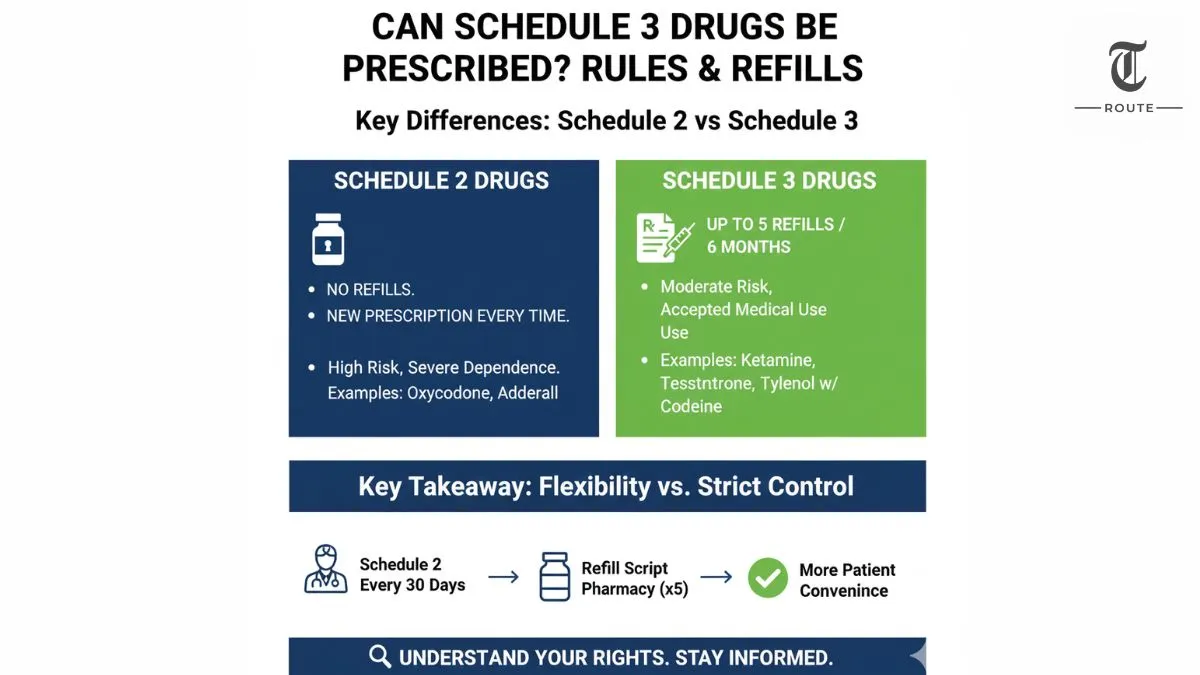
| Feature | Schedule 2 Drugs | Schedule 3 Drugs |
|---|---|---|
| Refills allowed? | No refills permitted | Up to 5 refills allowed |
| Time limit | No federal time limit, but new prescription required each time | 6 months from original prescription date |
| Prescription type | Written prescription only (usually on special forms) | Written, oral, fax, or electronic |
| Patient convenience | Must visit doctor for each new prescription | Can refill at pharmacy (within limits) |
Key takeaway: Schedule 3 patients have much more flexibility than Schedule 2 patients. If you’re prescribed a Schedule 3 medication like low-dose codeine or testosterone, your doctor can authorize up to five refills within six months. Schedule 2 drugs like oxycodone or Adderall? Zero refills—you need a brand-new prescription every time.
Key Restrictions and Monitoring for Schedule 3 Drugs
Even though Schedule 3 drugs are easier to prescribe than Schedule 2, they still face federal oversight:
- Recordkeeping: Pharmacies must track every prescription, including the prescribing doctor, patient details, drug dispensed, and refill history.
- DEA reporting: Certain Schedule 3 drugs trigger quarterly reporting to the DEA, especially if large quantities are dispensed.
- State variations: Some states have stricter rules than federal law. For example, certain states limit Schedule 3 refills further or require special registration.
- Doctor monitoring: Prescribers must document legitimate medical purpose and follow up with patients to prevent abuse or diversion.
Common Schedule 3 Drugs That Get Prescribed Daily
To make this concrete, here are Schedule 3 drugs you’ll find in legitimate medical settings:
- Ketamine: Used as an anesthetic in surgery and emergency medicine. Also gaining attention for depression treatment.
- Low‑dose codeine products: Pain relievers like Tylenol #3 (acetaminophen + codeine) for moderate pain or cough suppression.
- Anabolic steroids/testosterone: Prescribed for hormone replacement therapy, muscle wasting diseases, and certain anemias.
- Buprenorphine: Used for opioid addiction treatment (Suboxone, Subutex).
These aren’t street drugs—they’re prescribed millions of times each year for patients who need them under medical supervision.
Schedule 3 vs Schedule 2: Real‑World Impact
Consider a patient with moderate pain:
- Schedule 2 prescription (oxycodone): One‑time fill only. Patient returns to doctor in 30 days for a new script. Pharmacy fills immediately but no refills.
- Schedule 3 prescription (codeine + acetaminophen): Doctor authorizes five refills over six months. Patient calls pharmacy for refills without a new office visit.
This flexibility makes Schedule 3 drugs more practical for ongoing treatment while still protecting against the highest abuse risks.
Disclaimer: Always Follow Federal and State Law
Important legal note: This article explains general federal rules for Schedule 3 drugs under the Controlled Substances Act. State laws may impose additional restrictions, and DEA regulations can change. Doctors, pharmacists and patients should always verify current federal and state requirements before prescribing, dispensing or using Schedule 3 substances. For the latest guidance, consult the DEA website or your state pharmacy board.
Why Schedule 3 Prescription Rules Matter
Schedule 3 drugs strike a balance: powerful enough to treat real medical conditions, flexible enough for practical use, but controlled enough to limit abuse. The refill allowance sets them clearly apart from Schedule 2 drugs while keeping safeguards in place.
Whether you’re a doctor writing scripts, a pharmacist filling them, or a patient wondering about your options, understanding these rules helps navigate America’s complex controlled‑substance system safely and legally.