IRS Pandemic Refund 2026: Who Qualifies, Payment Dates and How to Claim Before the Deadline
Millions of Americans could be owed money from the IRS dating back to the pandemic years, and most of them have no idea. A court ruling has opened the door for individuals and businesses to reclaim tax penalties they were charged between 2020 and 2023, but the window to file a claim is closing fast. The deadline is July 10, 2026, and after that date, the opportunity is gone.
Why This IRS Refund Is Happening Now
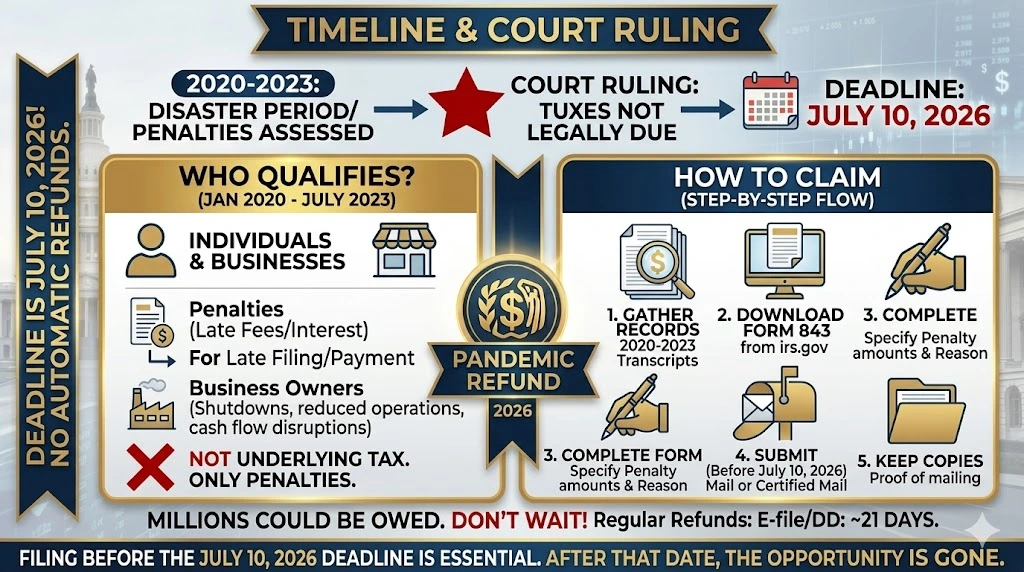
Six years after the start of the COVID-19 pandemic, an ongoing lawsuit filed against the government has resulted in courts determining that taxes were technically not legally due during the pandemic disaster period. Because the years 2020 through mid-2023 qualified as a federal disaster period, penalties like late fees and interest charges applied during that time may have been wrongfully assessed.
Tax professionals say this could affect a very large number of people. John Gustafson of Venn Tax and Bookkeeping, who has been advising clients on this issue, put it plainly. “Could be millions that will be affected by this.”
The IRS has not automatically issued these refunds. The money does not come back on its own. Anyone who believes they qualify has to actively file a claim before the July deadline.
Who Qualifies for the IRS Pandemic Refund?
Eligibility applies to individuals and businesses that were assessed penalties, late fees, or interest charges by the IRS during the period between January 2020 and July 2023. If the IRS charged a penalty during those years because of late filing or late payment, there is a legal basis to request that money back under the disaster period ruling.
This does not apply to the underlying tax amount owed. It specifically covers the penalties and interest added on top of that amount. If no penalties were charged during that window, there is nothing to claim under this particular provision.
Business owners who faced shutdowns, reduced operations, or cash flow disruptions during the pandemic and fell behind on tax payments as a result are among the most likely to have qualifying penalties on record.
The Deadline Is July 10, 2026 — Do Not Miss It
This is the most important detail in the entire story. July 10, 2026 is the hard cutoff date for filing a claim. Once that date passes, the ability to request a refund under this provision disappears entirely regardless of how strong the underlying claim might be.
Gustafson’s advice is straightforward. Even if there is uncertainty about whether the IRS will ultimately pay out, filing the claim costs nothing except time and the downside of not filing is losing the opportunity completely. “Even though you might not get it because the IRS might win the court case, you might as well try now,” he said.
How to File Your IRS Pandemic Refund Claim: Step by Step
- Pull together IRS records from 2020 through July 2023 to identify any penalty or interest charges assessed during that period. Tax transcripts from the IRS website will show this clearly.
- Download IRS Form 843 from the official IRS website at irs.gov.
- Fill out the form with the specific penalty amounts, the tax years involved, and the reason for the claim. The reason should reference the COVID-19 federal disaster declaration and the court ruling that determined taxes were not legally due during that period.
- Submit the completed Form 843 to the IRS before July 10, 2026. The form can be mailed to the IRS address listed in the form instructions based on the filer’s state of residence.
- Keep a copy of everything submitted and note the date of submission. If filing by mail, use certified mail with a return receipt so there is proof of timely submission.
Working with a tax professional or CPA who is familiar with this specific claim process is recommended, particularly for business owners with more complex penalty histories.
How Long Does the IRS Take to Process This Refund?
Processing times for Form 843 claims are not as fast as standard tax refund processing. The IRS typically takes several weeks to months to review and respond to abatement requests of this type. Filing as early as possible before the July 10 deadline gives the claim the best chance of being processed before any legal outcomes from the ongoing lawsuit affect the IRS’s response policy.
Refunds approved through this process are generally issued by direct deposit or paper check depending on the bank information the IRS has on file for the filer.
What Happens If the IRS Denies the Claim?
If the IRS denies the claim, there are options to appeal the decision. The IRS denial letter will include information about the appeals process. However, not filing at all means giving up the right to any refund entirely, which is why tax advisers are strongly encouraging everyone who may qualify to submit the claim now regardless of how confident they feel about the outcome.
The court case underlying this refund opportunity is still active. Outcomes could shift, and filers who have already submitted their Form 843 will be in a better position than those who waited and missed the deadline.
2026 IRS Tax Refund Timeline: Regular Refunds
Separately from the pandemic refund claim, regular 2025 tax year refunds are also being processed right now. The IRS began accepting returns on January 26, 2026. Here is what most filers can expect based on how they filed.
- E-file with direct deposit: Refund typically arrives within 21 days
- E-file with paper check: Approximately 4 weeks
- Paper return with direct deposit: 4 to 8 weeks
- Paper return with paper check: 4 to 9 weeks
The fastest combination is always electronic filing paired with direct deposit. The IRS reports that over 90 percent of electronically filed returns receive refunds within 21 days.
How to Track Your IRS Refund Status
The IRS Where’s My Refund tool at irs.gov allows filers to check the status of their regular refund online. It becomes available 24 hours after an e-filed return is accepted. Three pieces of information are needed to check status: Social Security number, filing status, and the exact refund amount claimed on the return.
Tax transcript updates happen separately from the Where’s My Refund tool and are processed once per day during early morning hours. First-time transcript updates can take up to four weeks to appear.
Common Reasons for Refund Delays in 2026
Some filers will experience delays beyond the standard 21-day window. The most common reasons include returns claiming the Earned Income Tax Credit or Child Tax Credit, which require additional verification and typically do not arrive until March. Errors on the return such as incorrect Social Security numbers or mismatched income figures also trigger manual review. Filers who receive the yellow Action Required message when checking their status online should watch for a letter from the IRS requesting supporting documents, which can now often be uploaded digitally rather than mailed in.
Frequently Asked Questions
What is the deadline to claim the IRS pandemic refund?
July 10, 2026. After this date, no claims can be submitted.
What form do I need to file?
IRS Form 843, Claim for Refund and Request for Abatement.
What penalties qualify?
Late filing and late payment penalties assessed between January 2020 and July 2023.
Do I need a tax professional to file this claim?
It is not required but is strongly recommended, especially for business owners or anyone with a complex penalty history during the pandemic years.
How do I check if I have qualifying penalties on record?
Request a tax transcript from irs.gov for each year from 2020 through 2023 and look for any penalty or interest charge codes on the transcript.