List of Schedule 3 Drugs in the US (With Examples)
Direct Answer
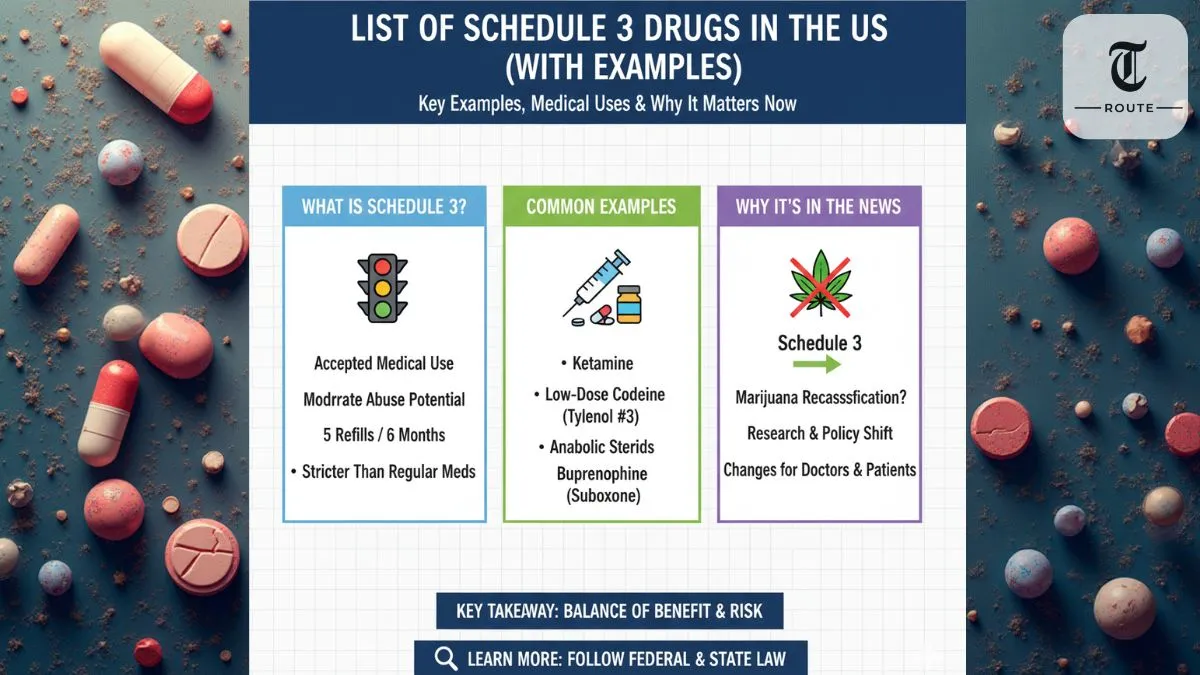
A Schedule 3 drug is a controlled substance that has accepted medical uses but moderate abuse potential. Examples include ketamine, certain codeine products, anabolic steroids and buprenorphine. They require prescriptions and limited refills.
Why People Are Searching Schedule 3 Drug Lists Now
The phrase “Schedule 3 drugs” is suddenly everywhere because of major changes in US drug policy. Cannabis is being considered for reclassification from Schedule 1 to Schedule 3, which would put marijuana in the same category as drugs like ketamine and low-dose codeine. This shift could make medical research easier and change prescription rules nationwide.
People want to understand what Schedule 3 actually means by seeing real examples. Doctors, patients and curious readers are looking up the full list to see how everyday prescription drugs fit into this controlled category.
Simple Explanation: What Makes a Drug Schedule 3?
Think of drug schedules like traffic lights for medicine. Schedule 1 drugs are “red lights” — illegal to prescribe with no accepted medical use. Schedule 5 drugs are “green lights” — easy prescriptions with low risk.
Schedule 3 drugs are “yellow lights.” Doctors can prescribe them for real medical needs like pain relief, anesthesia or hormone therapy. But pharmacies track every prescription, limit refills to five within six months, and doctors must document why they’re needed. The abuse risk is real but lower than powerful opioids like fentanyl (Schedule 2).
Complete List of Schedule 3 Drugs + Examples Table
| Drug Name | Common Medical Use | Examples / Notes |
|---|---|---|
| Ketamine | Anesthesia, depression treatment | Surgery, emergency medicine, recent FDA approval for depression |
| Codeine combinations | Moderate pain, cough suppression | Tylenol #3, low-dose codeine + acetaminophen |
| Anabolic steroids | Hormone replacement, muscle wasting | Testosterone, nandrolone; abused in bodybuilding |
| Buprenorphine | Opioid addiction treatment | Suboxone, Subutex; used in MAT programs |
| Testosterone products | Low testosterone, anemia | Injections, gels, patches for hormone therapy |
| Dronabinol | Nausea from chemotherapy, appetite loss | Synthetic THC (Marinol); cannabis-derived |
What Schedule 3 Drugs Mean for Normal People
For patients, Schedule 3 drugs mean legitimate treatments with less hassle than Schedule 2 narcotics. If you need ketamine for surgery or low-dose codeine for dental pain, your doctor can prescribe it legally. You might get up to five refills over six months—far more convenient than Schedule 2 drugs that require a new office visit every time.
For parents and families, it means understanding that some common medicines carry extra rules. Anabolic steroids for legitimate hormone therapy are Schedule 3, but illegal use for bodybuilding is a federal crime. Pharmacies must report suspicious patterns, so doctors monitor long-term use closely.
For employers and HR teams, Schedule 3 prescriptions affect drug testing and workplace policies. They’re controlled but not “hard drugs,” so clear communication with employees helps avoid confusion.
FAQs: Schedule 3 Drugs Explained
Are all Schedule 3 drugs narcotics?
No. Schedule 3 includes narcotics like codeine combinations, but also anesthetics (ketamine), steroids (testosterone) and addiction treatments (buprenorphine). It’s a broad category covering different medical needs.
Can Schedule 3 drugs be refilled?
Yes, up to five refills within six months from the original prescription date. This is the biggest difference from Schedule 2 drugs, which allow zero refills.
Is marijuana a Schedule 3 drug?
Not yet federally, but it’s under consideration for reclassification from Schedule 1. If approved, cannabis would join ketamine and codeine products in Schedule 3.
Do doctors need special permission for Schedule 3 drugs?
Doctors need DEA registration that includes Schedule III authority, which most primary care physicians already have. No extra special permission is required beyond standard controlled-substance registration.
What happens if you abuse Schedule 3 drugs?
Penalties vary by state but generally include fines, probation or jail time for possession without prescription. Trafficking carries federal felony charges with years in prison, even though Schedule 3 is less severe than Schedules 1 and 2.