Short Answer
The True Story of Togo and Balto, the Dogs Who Helped Save Nome In 1925, a dangerous outbreak of diphtheria threatened the ... Read more
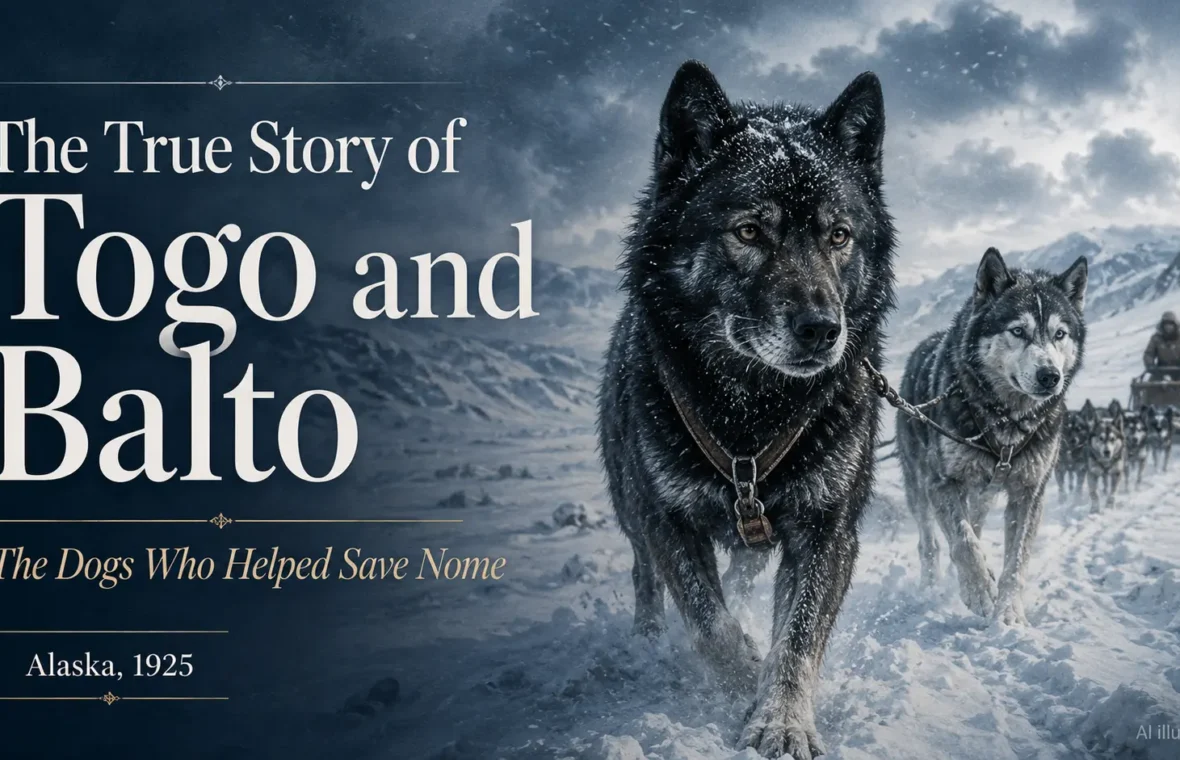
The True Story of Togo and Balto, the Dogs Who Helped Save Nome
In 1925, a dangerous outbreak of diphtheria threatened the remote town of Nome, Alaska. The medicine was hundreds of miles away, the sea was frozen, and flying was too risky in the winter weather.
So the medicine moved the old way: by train as far as possible, then by dog sled across Alaska.
This became known as the 1925 serum run to Nome. Balto became the most famous dog from the mission, but Togo also played one of the hardest and most important roles in the rescue.
What Was the 1925 Serum Run?
In January 1925, doctors in Nome feared a diphtheria outbreak. Diphtheria was a serious bacterial disease, and children were especially at risk.
The town needed diphtheria antitoxin quickly. The medicine was sent by train to Nenana, Alaska. From there, teams of mushers and sled dogs carried it across frozen trails toward Nome.
The relay covered hundreds of miles in brutal winter conditions. Snow, ice, darkness, and extreme cold made the trip dangerous for both people and dogs.
Was It a Vaccine?
No. The medicine carried to Nome was diphtheria antitoxin, not a vaccine.
That detail matters because many viral posts call it a vaccine or simply say the dogs carried “medicine.” The simple version is fine for a headline, but the accurate version is better for an article: the teams carried antitoxin needed to treat a deadly outbreak.
Who Was Balto?
Balto was the sled dog who led the final team into Nome. His musher was Gunnar Kaasen.
Because Balto arrived with the medicine at the end of the relay, newspapers and the public quickly made him the face of the whole mission. A statue of Balto was later placed in New York City’s Central Park, and his name became known around the world.
Balto deserves respect. He did his part in a dangerous storm and helped finish the delivery. But the full story includes many other dogs and mushers.
Who Was Togo?
Togo was the lead dog of Leonhard Seppala’s team. He was already an experienced sled dog, and he was about 12 years old during the serum run.
Many historians and dog experts argue that Togo’s part of the journey was the hardest. He led his team across one of the most dangerous sections of the route, including difficult ice and harsh weather.
The National Park Service notes that while Balto often gets the credit for saving Nome, Togo led his team across the most dangerous leg of the journey.
Why Did Balto Become More Famous?
Balto became famous because his team reached Nome at the end. That final arrival gave newspapers a clear hero photo and a simple ending to the story.
That is how public memory often works. The last face people see becomes the symbol.
But the serum run was not one dog and one man. It was a relay involving many mushers and many sled dogs. Balto finished the mission. Togo helped make the finish possible.
What Is Confirmed?
| Detail | Status |
|---|---|
| The serum run happened in 1925 | Confirmed |
| The medicine was diphtheria antitoxin | Confirmed |
| Sled dog teams carried the medicine toward Nome | Confirmed |
| Balto led the final team into Nome | Confirmed |
| Togo led one of the hardest and most dangerous parts of the relay | Confirmed by historical sources |
| Only Balto saved Nome by himself | Not accurate |
Why This Story Still Goes Viral
The story works because it is easy to understand in one sentence: dogs carried life-saving medicine through Alaska to help save a town.
That alone is powerful. But the deeper story is even
Sources & Notes
This article is written as an independent explainer. Readers should verify official announcements through primary public sources, court records, government notices or the concerned organisation before acting on political or legal claims.
FAQs
What is TruthRoute.com?
TruthRoute.com is an independent U.S.-based global news and analysis website publishing source-based reporting, explainers and opinion across world, politics, business, tech, health, entertainment and sports.
How should readers use this article?
Use it as an independent explainer and starting point for context. For legal, political or official claims, always check primary documents and official sources.

Truth Route Editor
Newsroom byline for source-based explainers, viral story breakdowns and public-interest updates published by TruthRoute.com.