Short Answer
Sergeant Stubby: The Stray Dog Who Became a World War I Hero Sergeant Stubby did not start life as a military dog. ... Read more
Sergeant Stubby: The Stray Dog Who Became a World War I Hero
Sergeant Stubby did not start life as a military dog.
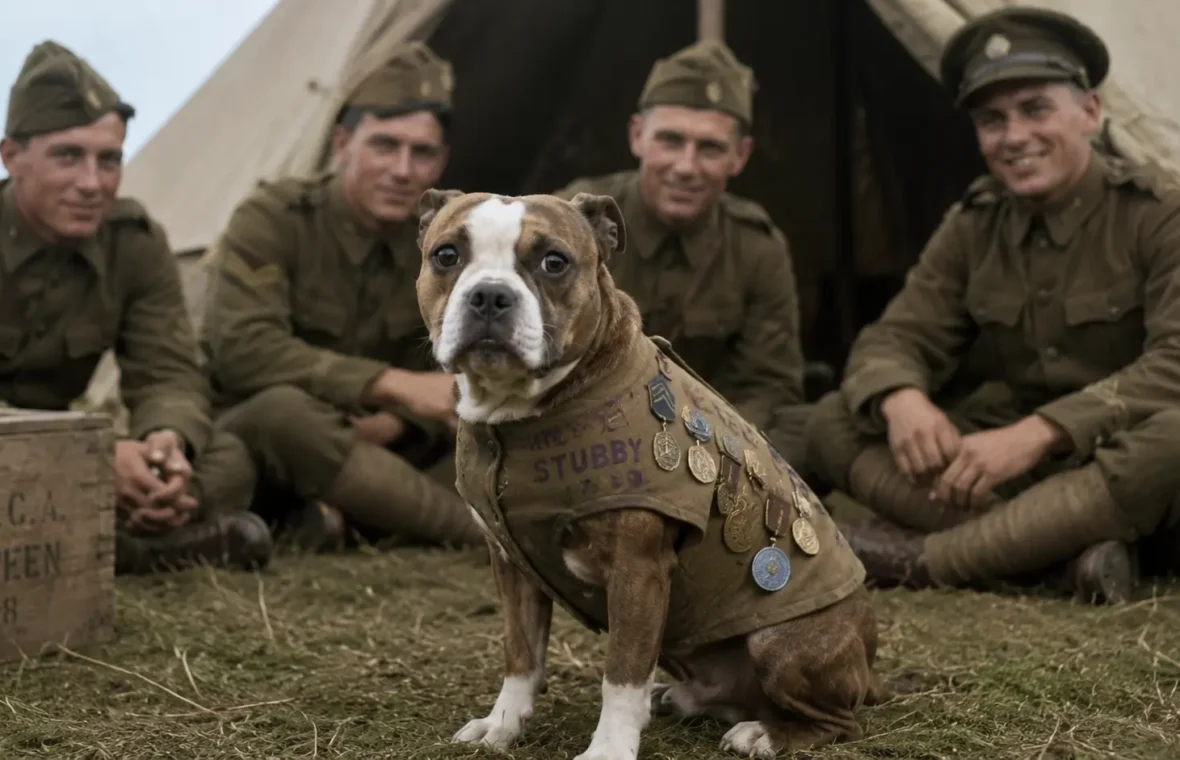
He was a stray dog who wandered onto a training field in Connecticut during World War I. A soldier noticed him, the unit kept him around, and before long Stubby became more than a mascot.
He went to France with American troops, warned soldiers about gas attacks, helped locate wounded men, and became one of the most famous dogs in U.S. military history.
Who Was Sergeant Stubby?
Sergeant Stubby was a small mixed-breed dog, often described as a Boston Terrier type. His exact breed is not fully known.
He became connected with the 102nd Infantry Regiment, 26th Yankee Division, after meeting soldiers while they were training near Yale Field in 1917. One of those soldiers was J. Robert Conroy, who developed a close bond with him.
Stubby was not officially trained like modern military working dogs. He became part of the unit because soldiers liked him, trusted him, and felt better with him around.
How Did a Stray Dog Reach the War?
When the soldiers left for Europe, Conroy reportedly smuggled Stubby aboard the ship.
That detail sounds like something from a movie, but it fits the way many military animal stories began in earlier wars. Dogs often became mascots because they attached themselves to units and gave soldiers a sense of normal life in a place that was anything but normal.
Once Stubby reached France, he stayed close to the men of the 102nd. Over time, his role became more serious.
What Did Stubby Do During World War I?
Stubby is remembered for several battlefield actions. Historical accounts say he warned soldiers about gas attacks, helped find wounded men, and alerted troops to danger.
After being exposed to gas himself, Stubby reportedly became sensitive to the smell. When he detected gas, he would bark or alert the soldiers around him, giving them a chance to protect themselves.
He also helped locate wounded soldiers between the lines. In the chaos of trench warfare, a dog’s hearing, smell, and movement could sometimes help humans find men who might otherwise be missed.
Did Stubby Really Capture a German Soldier?
One of the most famous parts of Stubby’s story is that he helped capture a German soldier.
According to historical accounts repeated by Connecticut and military sources, Stubby found a German soldier hiding and held him by biting or grabbing at his clothing until American soldiers arrived.
Because the story has been retold many times, the safest way to describe it is this: Stubby is credited with helping capture an enemy soldier. That version keeps the story strong without adding details that cannot be personally verified today.
Was Stubby Really Promoted to Sergeant?
Stubby is widely described as the first dog promoted to the rank of sergeant in the U.S. Army.
It is important to understand that animal ranks in that era were not handled like human military promotions. Still, Stubby’s rank became part of his public story, and he was celebrated as Sergeant Stubby during and after the war.
Whether people focus on the formal rank or the symbolic honor, the meaning is clear: soldiers and the public saw Stubby as more than a pet.
What Is Confirmed?
| Detail | Status |
|---|---|
| Stubby was connected to the 102nd Infantry, 26th Yankee Division | Confirmed |
| He was found as a stray near soldiers training in Connecticut | Confirmed by historical accounts |
| He went to France with American troops | Confirmed by multiple sources |
| He warned soldiers about gas attacks | Confirmed by historical accounts |
| He helped locate wounded soldiers | Confirmed by historical accounts |
| He is credited with helping capture an enemy soldier | Widely reported |
| Every medal or rank detail should be treated exactly like a modern military record | Not always; some honors were ceremonial or public recognition |
Stubby Was Wounded and Still Returned
Stubby was not just present around soldiers. He was exposed to the danger of war.
Accounts say he was injured by shrapnel and affected by gas. After receiving care, he returned to the unit. That detail is one reason his story had such emotional power for soldiers who had lived through the same war.
He was small, but he had been there with them.
What Happened After the War?
After World War I, Stubby returned to the United States and became famous.
He appeared in parades, met U.S. presidents, and was honored by military and animal welfare groups. General John J. Pershing presented him with a medal in 1921, according to Connecticut records.
Stubby later lived with J. Robert Conroy while Conroy attended Georgetown University. He became connected with Georgetown as a mascot figure before his death in 1926.
Where Is Sergeant Stubby Today?
Stubby’s preserved remains are part of the Smithsonian National Museum of American History collection.
His story is also remembered through museums, books, and memorials. In 2026, a new statue of Stubby was unveiled at the Connecticut State Library, marking 100 years since his death.
That matters because Stubby’s story is not just a cute dog story. It is part of American military memory.
Why Sergeant Stubby’s Story Still Goes Viral
Stubby’s story has everything people respond to: a stray dog, a soldier bond, danger, loyalty, and a real historical setting.
He was not born special. He was not bred for military work. He simply showed up, stayed close, and became useful in ways no one expected.
That is why the story still works online. People like stories where the overlooked one becomes the hero.
What People Often Get Wrong
- They describe Stubby as a modern police or military K9.
- They treat every part of his rank and medals as identical to modern military awards.
- They add exaggerated battlefield scenes that are not needed.
- They forget J. Robert Conroy’s role in caring for him.
- They leave out the emotional value Stubby gave soldiers after the war.
The real story is already strong. A stray dog joined soldiers, survived war, helped his unit, and became a national symbol.
Why Dogs Mattered to Soldiers
Dogs have often helped soldiers in ways that are both practical and emotional.
Sometimes they warn of danger. Sometimes they carry messages. Sometimes they simply stay close when people are far from home and under stress.
Stubby’s story sits between those roles. He was useful in the field, but he also gave comfort. That combination made him unforgettable.
Conclusion
Sergeant Stubby was a stray dog who became one of the most remembered animals of World War I.
He warned soldiers of gas attacks, helped locate wounded men, survived injury, and became a symbol of loyalty for the troops who served beside him. His story is still powerful because it does not need to be polished into myth.
A stray dog walked into the lives of American soldiers, and history remembered him.
Sources
- National WWI Museum and Memorial: The Price of Freedom, Stubby
- Connecticut Military Department: Stubby the Military Dog
- National Guard: Sgt. Stubby Honored with Statue
- Britannica: Sergeant Stubby
FAQs
Who was Sergeant Stubby?
Sergeant Stubby was a stray dog who became the mascot and companion of American soldiers in the 102nd Infantry during World War I.
Was Sergeant Stubby a real dog?
Yes. Stubby was real, and his preserved remains are held by the Smithsonian National Museum of American History.
What did Sergeant Stubby do in World War I?
Stubby warned soldiers about gas attacks, helped locate wounded men, and is credited with helping capture an enemy soldier.
Was Sergeant Stubby really promoted to sergeant?
Stubby is widely remembered as a dog promoted to sergeant, though animal ranks and honors from that era should be understood as partly ceremonial and symbolic.
Where can people learn about Sergeant Stubby today?
People can learn about Stubby through the Smithsonian, the National WWI Museum and Memorial, Connecticut military history resources, and recent memorial coverage from the National Guard.
Sources & Notes
This article is written as an independent explainer. Readers should verify official announcements through primary public sources, court records, government notices or the concerned organisation before acting on political or legal claims.
FAQs
What is TruthRoute.com?
TruthRoute.com is an independent U.S.-based global news and analysis website publishing source-based reporting, explainers and opinion across world, politics, business, tech, health, entertainment and sports.
How should readers use this article?
Use it as an independent explainer and starting point for context. For legal, political or official claims, always check primary documents and official sources.

Truth Route Editor
Newsroom byline for source-based explainers, viral story breakdowns and public-interest updates published by TruthRoute.com.