Short Answer
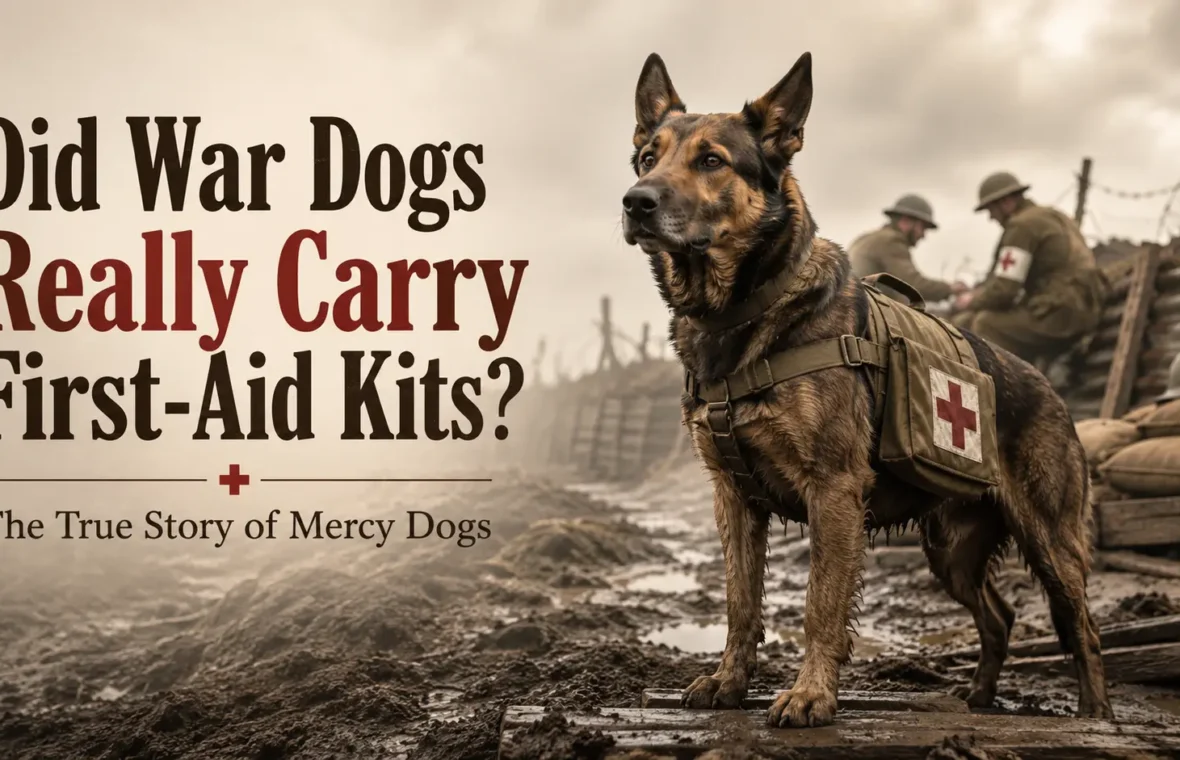
Did War Dogs Really Carry First-Aid Kits? Yes, some war dogs really did carry first-aid supplies. They were known as mercy dogs, ... Read more
Did War Dogs Really Carry First-Aid Kits?
Yes, some war dogs really did carry first-aid supplies. They were known as mercy dogs, ambulance dogs, Red Cross dogs, or casualty dogs. During World War I, these trained dogs crossed dangerous battlefield areas to find wounded soldiers who human medics could not always reach safely.
The viral idea of a dog carrying medical supplies is not just internet fiction. The real history is even more powerful. These dogs were trained to move quietly, search for injured soldiers, carry basic supplies, and lead medics back to men who were still alive.
One important note: the viral story about a frozen World War II German Shepherd being found in a glacier with medical supplies has not been confirmed by reliable historical or news sources. But the real story of mercy dogs is documented, and it deserves attention on its own.
The Real Incident: Prusco, the Mercy Dog
One of the most powerful real examples is a French mercy dog named Prusco. According to historical accounts cited by the U.S. Department of Defense, Prusco reportedly located more than 100 wounded soldiers during a single battle.
Prusco was not a police dog in the modern sense. He was a military rescue dog working in a medical role. His job was not to attack, chase, or guard. His job was to find men who had been left wounded in dangerous ground between the trenches.
When a mercy dog found a soldier who could still move, the soldier could use supplies from the dog’s saddlebag. If the soldier needed help, the dog could return to its handler and guide medics back to the exact location. In some cases, dogs were trained to return with a piece of cloth or a signal item to show that someone had been found.
What Mercy Dogs Carried
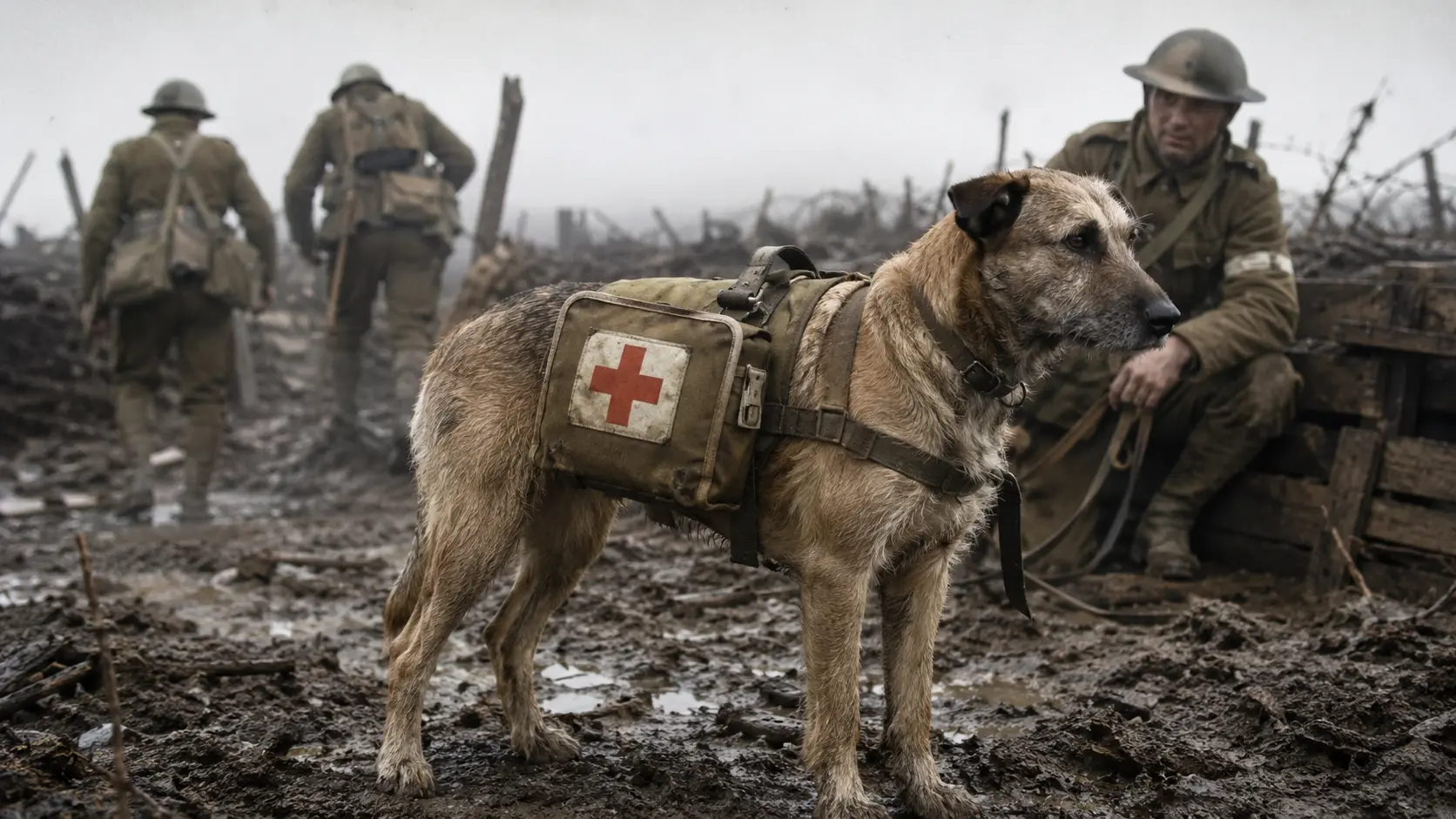
Mercy dogs usually wore small packs or saddlebags. These bags could carry basic battlefield aid items that a wounded soldier might use while waiting for medical help.
- Bandages and dressing supplies
- Small water containers
- Basic first-aid materials
- Sometimes small rations or comfort items
The goal was simple: give the injured soldier a chance to survive long enough for medics to arrive. In a battlefield filled with smoke, mud, noise, and danger, a trained dog could sometimes reach places where a person could not.
How These Dogs Found Wounded Soldiers
Mercy dogs were trained to search quietly, often after fighting had slowed down or stopped. They used smell, movement, and sound to locate wounded men. They were also trained not to bark, because barking could alert enemy soldiers.
If the dog found no one alive, it could return and signal that no survivor had been found. If it found a wounded soldier, it could guide medics back. This made mercy dogs more than mascots. They were part of the battlefield medical system.
Was This an Army Dog or a Police Dog?
This was mainly an army and Red Cross rescue role, not a police role. Many mercy dogs were connected to military units, ambulance units, or national Red Cross programs. Breeds such as German Shepherds, Dobermans, Airedales, and other strong working dogs were often used because they were intelligent, trainable, and physically capable.
The German army called these dogs medical dogs, or Sanitätshunde. Other countries had similar programs. Their work was dangerous, but their mission was humanitarian: find the wounded and bring help.
Was a Frozen WWII Medic Dog Really Found in a Glacier?
The viral glacier version is a different story. It claims that a frozen German Shepherd from World War II was found in the Alps with medical supplies still attached. That story is emotional and highly shareable, but reliable confirmation could not be found from major historical archives, museums, official military sources, or trusted news reports.
Because of that, it should not be published as a confirmed fact. A safer and more trustworthy way to tell the story is this: while the frozen glacier claim remains unverified, real war dogs did carry medical supplies and did help wounded soldiers during World War I.
What We Know and What Is Not Confirmed
| Claim | Status |
|---|---|
| Dogs carried first-aid supplies during World War I | Confirmed by historical sources |
| Mercy dogs searched battlefields for wounded soldiers | Confirmed by military history sources |
| Prusco reportedly found more than 100 wounded men in one battle | Reported in historical accounts cited by the U.S. Department of Defense |
| A frozen World War II German Shepherd was found in a glacier with medical supplies | Not confirmed by reliable sources |
Why This Story Goes Viral
This kind of story goes viral because it has everything people stop scrolling for: danger, loyalty, history, and an animal doing something deeply human. A dog running into a battlefield with medical supplies is not just a war fact. It is a reminder that courage does not always look like a weapon.
For many readers, the most emotional part is not only that these dogs helped save lives. It is that some of them stayed beside soldiers who could not be saved, giving comfort in their final moments. That detail is why mercy dogs are still remembered more than a century later.
Why Mercy Dogs Still Matter Today
Modern military working dogs, police K9s, search-and-rescue dogs, and therapy dogs all show how powerful the bond between humans and dogs can be. Today, dogs help find missing people, detect danger, support veterans, and comfort people during emergencies.
The mercy dogs of World War I were early examples of that same bond. They were trained for practical work, but their impact went beyond the task. They brought help, hope, and sometimes companionship when people needed it most.
Conclusion
War dogs really did carry first-aid supplies. The most reliable version of this story is not the unverified frozen glacier claim, but the documented history of World War I mercy dogs. Dogs like Prusco and Captain became part of battlefield rescue history because they found wounded soldiers in places too dangerous for many human medics to reach.
The true story is powerful enough without adding fake details. Mercy dogs were not legends made for social media. They were real working animals who served in one of the hardest chapters of modern history.
Sources
- U.S. Department of Defense: War Dogs and the Military Working Dog Program
- National WWI Museum and Memorial: Dogs in WWI
- U.S. War Dogs Association: WWI War Dogs
FAQs
Did dogs really carry first-aid kits in war?
Yes. During World War I, mercy dogs carried small medical supplies in saddlebags and helped locate wounded soldiers on the battlefield.
Who was Prusco the mercy dog?
Prusco was a French mercy dog from World War I. Historical accounts say he located more than 100 wounded soldiers during one battle.
Were mercy dogs police dogs?
No. Mercy dogs were mainly military and Red Cross rescue dogs. Their job was medical support, not law enforcement.
Is the frozen German Shepherd glacier story true?
There is no reliable confirmation for that viral claim. The real documented history is that World War I mercy dogs carried first-aid supplies and helped wounded soldiers.
Why were dogs used on battlefields?
Dogs could move quickly, use their sense of smell, stay quiet, and reach areas that were too dangerous for human medics. That made them valuable for rescue, messages, guarding, and comfort.
Sources & Notes
This article is written as an independent explainer. Readers should verify official announcements through primary public sources, court records, government notices or the concerned organisation before acting on political or legal claims.
FAQs
What is TruthRoute.com?
TruthRoute.com is an independent U.S.-based global news and analysis website publishing source-based reporting, explainers and opinion across world, politics, business, tech, health, entertainment and sports.
How should readers use this article?
Use it as an independent explainer and starting point for context. For legal, political or official claims, always check primary documents and official sources.

Truth Route Editor
Newsroom byline for source-based explainers, viral story breakdowns and public-interest updates published by TruthRoute.com.