Short Answer
Florida Gulf Tropical Development Trend: What Pet Owners Should Know Today Searches for “tropical development Florida Gulf” are rising today, but the ... Read more
Florida Gulf Tropical Development Trend: What Pet Owners Should Know Today
Searches for “tropical development Florida Gulf” are rising today, but the latest Atlantic outlook from the National Hurricane Center says tropical cyclone formation is not expected in the North Atlantic, Caribbean Sea, or Gulf during the next seven days.
That is the important first line. People are searching the phrase, but the official outlook does not currently point to a named storm or expected tropical cyclone formation in the Atlantic basin. Still, the trend is useful for one reason: it reminds pet owners to get their storm plan ready before the weather actually forces a decision.
This article is part of TruthRoute Animal Stories, where we cover animal-related stories with the confirmed facts first and practical context after.
What The National Hurricane Center Says
The National Hurricane Center’s Atlantic Tropical Weather Outlook for July 14, 2026, said tropical cyclone formation was not expected during the next seven days for the North Atlantic, Caribbean Sea, and Gulf. That means the current search spike should not be treated as proof that a storm is forming in the Gulf right now.
Weather searches often move faster than official updates. A phrase can trend because people saw a model map, a local weather post, a discussion online, or a headline from a different basin. The safest approach is to check the official outlook before sharing claims.
For pet owners, though, the timing is not wasted. Gulf Coast families do not need a named storm to prepare. They need a plan before roads, hotels, shelters, and supply shelves become stressful.
Why Pet Owners Should Pay Attention Early
Pets depend on people during emergencies. They cannot read evacuation maps, refill prescriptions, pack carriers, or explain medical needs to a shelter worker. If a storm threat becomes real, every hour gets louder and more crowded. That is when small missing details become big problems.
The American Red Cross says family disaster plans should include pets. It also notes that if it is not safe for people to stay home, it is not safe to leave pets behind either.
That advice is simple, but during storms it matters. Many people delay because they think they will figure it out later. Later is exactly when pet-friendly hotels are full, carriers are missing, vaccination records are not printed, and nervous animals are harder to move.
The Pet Storm Kit That Should Already Be Ready
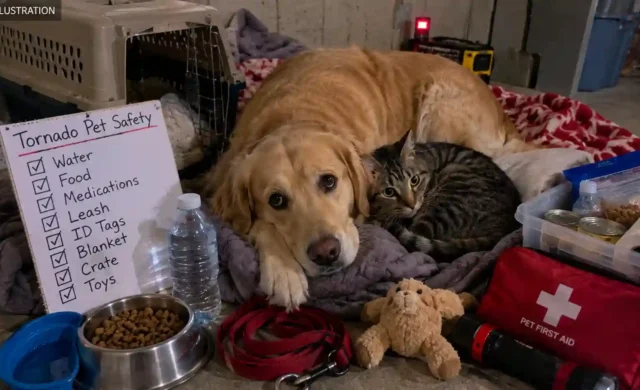
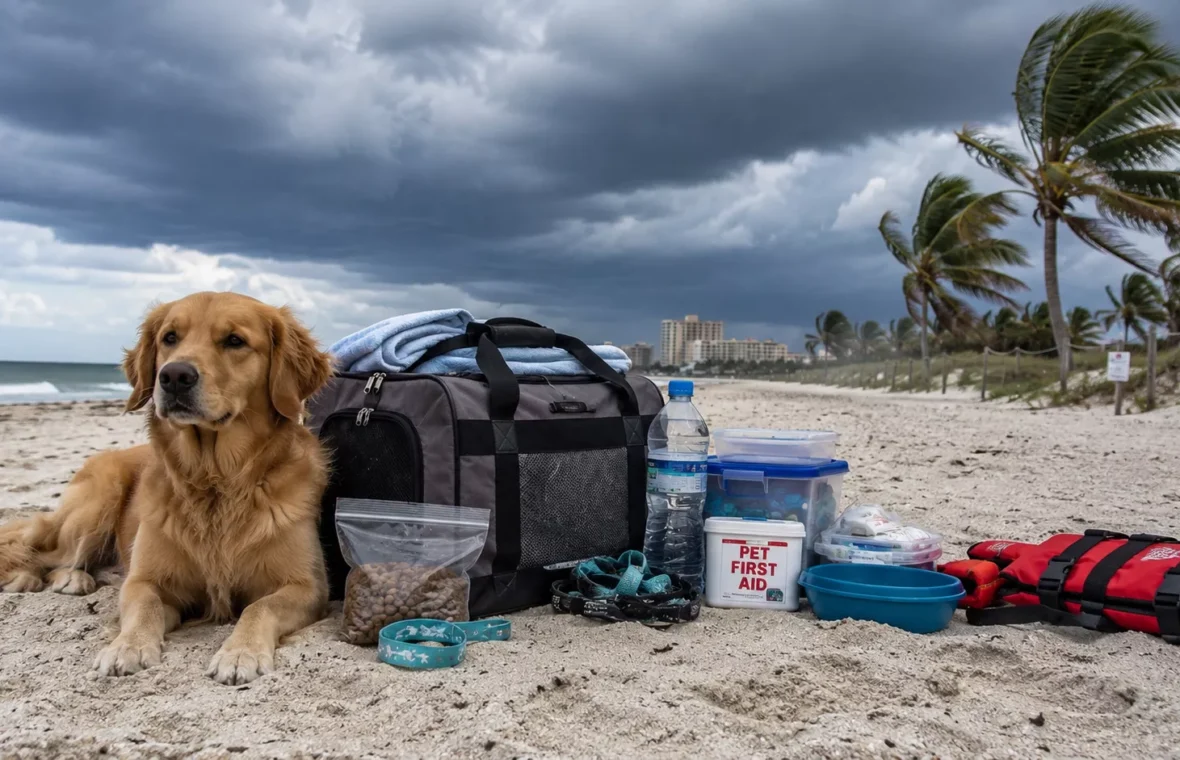
A pet emergency kit does not need to be fancy. It needs to be complete enough that you can leave quickly and still care for your animal for several days.
- Sturdy leash, harness, or carrier
- Pet food and drinking water
- Bowls and a manual can opener if needed
- Medication and copies of medical records in a waterproof bag
- Pet first aid kit
- Current photos of you with your pet
- Feeding schedule and behavior notes
- Veterinarian name and phone number
- Cat litter, waste bags, bedding, and a familiar toy if space allows
The photo detail is easy to overlook. If a pet gets lost, a picture of you with the animal can help reduce confusion and prove the animal belongs with you.
Check The Collar, Chip, And Records Today
Before any storm is close, check three things: collar tag, microchip, and vaccination record.
A collar tag should have a working phone number. A microchip is only useful if the registration information is current. Vaccination records matter because boarding facilities, animal shelters, and some emergency arrangements may ask for proof before accepting pets.
The Red Cross recommends current vaccinations, securely fastened identification, and considering a microchip through a veterinarian. Those are not last-minute tasks. They are the kind of details that should be handled before a forecast becomes urgent.
Know Where Your Pet Can Go
Not every hotel accepts pets. Not every shelter can house pets in the same place as people. Service animals have different rules, but household pets may need separate arrangements depending on the emergency and local shelter setup.
Make a short list now:
- Pet-friendly hotels on your evacuation route
- Friends or relatives outside the risk area
- Boarding facilities
- Veterinary offices that offer emergency boarding
- Local animal shelters or rescue groups that announce storm support
Do not wait until a warning is issued to start calling. The families that call early usually get more options.
Practice The Carrier Before You Need It
Many pets only see a carrier when something stressful is happening. That can make evacuation harder. If you have time today, leave the carrier out. Put a blanket inside. Let the animal walk around it. Feed treats near it. Make it boring and familiar.
This matters especially for cats and small dogs that may hide when the house becomes loud or rushed. An animal that is used to the carrier is easier to move safely.
What Is Confirmed Right Now
- Search interest for Florida Gulf tropical development is rising.
- The National Hurricane Center’s July 14 Atlantic outlook says tropical cyclone formation is not expected during the next seven days.
- Pet preparedness remains useful during hurricane season even when no storm is currently expected.
- The Red Cross recommends including pets in disaster plans and preparing pet emergency supplies.
What Is Not Confirmed
- There is no confirmed named storm threatening the Florida Gulf from the Atlantic outlook cited here.
- The current search spike does not prove a tropical cyclone is forming.
- Local rain, heat, or marine conditions may still vary, so residents should check local National Weather Service updates.
Bottom Line
The Florida Gulf tropical development trend is worth watching, but not worth panicking over. The official Atlantic outlook says no tropical cyclone formation is expected in the next seven days. For pet owners, the better move is calm preparation.
Check the kit. Update the tag. Confirm the microchip. Find pet-friendly options before you need them. The best storm plan is the one that is already ready when the forecast changes.
Sources
Sources & Notes
This article is written as an independent explainer. Readers should verify official announcements through primary public sources, court records, government notices or the concerned organisation before acting on political or legal claims.
FAQs
What is TruthRoute.com?
TruthRoute.com is an independent U.S.-based global news and analysis website publishing source-based reporting, explainers and opinion across world, politics, business, tech, health, entertainment and sports.
How should readers use this article?
Use it as an independent explainer and starting point for context. For legal, political or official claims, always check primary documents and official sources.

Truth Route Editor
Newsroom byline for source-based explainers, viral story breakdowns and public-interest updates published by TruthRoute.com.