Short Answer
Smoky the WWII Yorkie: The Tiny Dog Who Helped Soldiers in a War Zone Smoky was only about four pounds, small enough ... Read more
Smoky the WWII Yorkie: The Tiny Dog Who Helped Soldiers in a War Zone
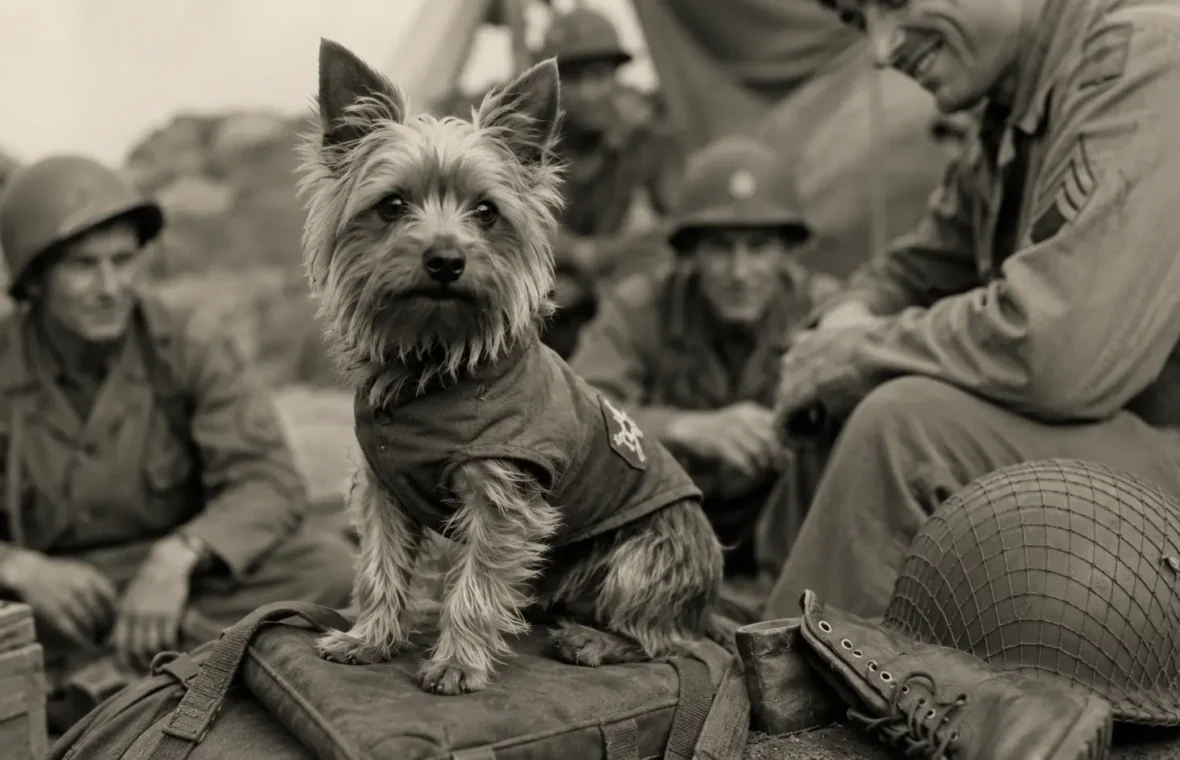
Smoky was only about four pounds, small enough to fit inside a soldier’s helmet. But during World War II, this tiny Yorkshire Terrier became part of one of the most unusual dog stories of the war.
She was not a large military dog. She was not trained to guard, attack, or track enemies. Her size was exactly what made her useful.
In the Pacific theater, Smoky helped soldiers run a communication line through a narrow pipe under an airstrip. Later, she became known for something quieter but just as meaningful: comforting wounded soldiers.
Who Was Smoky?
Smoky was a Yorkshire Terrier found during World War II and later owned by Corporal Bill Wynne, an American soldier from Ohio.
She was tiny, but she traveled with Wynne through difficult wartime conditions. Unlike official military working dogs, Smoky was more of a companion, mascot, and helper. Still, her story became famous because of what she did in a moment when her small size solved a serious problem.
Today, Smoky is remembered as one of the most unusual dogs connected to World War II.
The Pipe Mission That Made Smoky Famous
One of Smoky’s best-known moments happened near an airstrip at Lingayen Gulf in the Philippines.
American forces needed to run communication wire through a pipe under the airstrip. The pipe was narrow, roughly 70 feet long and about 8 inches wide. Sending men to dig a trench would have taken time and exposed them to danger.
Instead, the soldiers tried something different. They tied a string to Smoky and guided her through the pipe. Once she reached the other side, the string could be used to pull the communication wire through.
Smoky made it through. The job was done without forcing soldiers to dig under dangerous conditions.
Why That Mission Mattered
The mission was not dramatic in the movie sense. It was practical. A line needed to go through a narrow space, and Smoky was small enough to do what people could not do safely.
National Geographic reported that the communication network was established after Smoky made it through the pipe. The story has often been repeated because it shows how one small animal solved a real wartime problem.
That is what makes Smoky’s story different from many war dog stories. She did not need strength to help. She needed trust, timing, and a tiny body that could fit through a pipe.
Was Smoky an Official Military Dog?
Smoky is often called a war dog, but she was not the same kind of official military working dog as larger trained dogs used for patrol, sentry work, or detection.
She belonged to Bill Wynne and traveled with him. She became part of military life around him, helped in the pipe mission, and later became a source of comfort for wounded soldiers.
That distinction matters. Smoky’s role was real, but it was unusual.
Smoky and Wounded Soldiers
After the pipe mission, Smoky became known for her effect on wounded troops. She visited injured soldiers and performed tricks that gave them a break from pain, fear, and the stress of war.
Cleveland Metroparks describes Smoky as the world’s first therapy dog on record. Other sources describe her as an early example of how animals can help people recover emotionally during hard times.
Whether people use the phrase “therapy dog” in the modern sense or not, the meaning is clear: Smoky helped soldiers feel less alone.
What Is Confirmed?
| Detail | Status |
|---|---|
| Smoky was a Yorkshire Terrier connected to World War II | Confirmed |
| She was owned by Corporal Bill Wynne | Confirmed |
| She helped run a line through a narrow pipe under an airstrip | Confirmed by historical accounts |
| She comforted wounded soldiers | Confirmed by multiple accounts |
| She was a large trained attack dog | Not accurate |
| Every viral number about her missions is equally verified | Not always; some details vary by source |
Why Smoky’s Story Goes Viral
Smoky’s story works because it breaks expectations.
When people think of war dogs, they usually imagine German Shepherds, Belgian Malinois, or other large working breeds. Smoky was the opposite. She was tiny, delicate-looking, and easy to underestimate.
That contrast makes people stop. A small Yorkie in a soldier’s helmet is already memorable. Add the pipe mission and her work with wounded soldiers, and the story becomes almost impossible to ignore.
What People Often Get Wrong
- They make Smoky sound like a modern police or attack dog.
- They say she won the war by herself.
- They repeat every viral number without checking sources.
- They leave out Bill Wynne’s role in caring for and guiding her.
- They focus only on the pipe mission and ignore her comfort work with soldiers.
The real story is already strong enough. Smoky was small, useful, loved, and remembered for both courage and comfort.
Why Her Size Was Her Strength
Smoky’s size is the heart of the story. A larger dog could not have fit through that pipe. A person would have needed to dig. Smoky could simply crawl through.
In that moment, being small was not a weakness. It was the whole reason she could help.
That is why people still respond to the story. It reminds readers that usefulness does not always look powerful at first glance.
Smoky’s Memorial
Smoky is remembered at Cleveland Metroparks in Ohio, where a memorial honors her role during World War II and her place in therapy dog history.
The memorial helps keep her story alive for people who might never hear about a four-pound dog from the Pacific theater otherwise.
For many visitors, the most moving part is not only what Smoky did during the war. It is that someone thought a dog that small deserved to be remembered.
Conclusion
Smoky’s story is powerful because it is not about size. It is about timing, trust, and the strange ways animals can help people in moments of crisis.
She helped run a communication line through a narrow pipe during World War II. She brought comfort to wounded soldiers. And long after the war ended, she became remembered as one of the smallest dogs with one of the biggest stories.
Smoky was not the biggest war dog. She may have been one of the easiest to underestimate. That is exactly why people still remember her.
Sources
- National Geographic: Smoky, a Healing Presence for Wounded WWII Soldiers
- Cleveland Metroparks: Smoky Memorial
- The National WWII Museum: Best Friends Forever
- Military.com: The World’s First Therapy Dog Was a WWII Pacific Veteran
FAQs
Who was Smoky the dog?
Smoky was a tiny Yorkshire Terrier connected to World War II. She belonged to Corporal Bill Wynne and became known for helping soldiers and comforting wounded troops.
What did Smoky do in World War II?
Smoky helped run a communication line through a narrow pipe under an airstrip in the Philippines. She also visited and comforted wounded soldiers.
Was Smoky an official military working dog?
Smoky was not a typical official military working dog like larger patrol or sentry dogs. She was a companion and mascot who performed a real wartime task and became known for helping soldiers emotionally.
Why is Smoky called a therapy dog?
Smoky is often described as an early or first recorded therapy dog because she visited wounded soldiers and helped lift their spirits during recovery.
Where is Smoky remembered today?
Smoky is honored with a memorial at Cleveland Metroparks in Ohio.
Sources & Notes
This article is written as an independent explainer. Readers should verify official announcements through primary public sources, court records, government notices or the concerned organisation before acting on political or legal claims.
FAQs
What is TruthRoute.com?
TruthRoute.com is an independent U.S.-based global news and analysis website publishing source-based reporting, explainers and opinion across world, politics, business, tech, health, entertainment and sports.
How should readers use this article?
Use it as an independent explainer and starting point for context. For legal, political or official claims, always check primary documents and official sources.

Truth Route Editor
Newsroom byline for source-based explainers, viral story breakdowns and public-interest updates published by TruthRoute.com.